


Why "Generic" Cloud ERPs Fail in Indian Distribution Businesses: The "All-in-One" Trap
Built for everyone, tuned for no one—why generic ERPs break in Indian distribution
Executive Summary: The Modernization Paradox
The Indian mid-market distribution and manufacturing sector (turnover ₹50 Cr – ₹500 Cr) is at a strategic inflection point. Founders are under immense pressure to modernize. The narrative sold by the tech industry is seductive: "To scale, you must abandon legacy on-premise software (Tally) and migrate to a modern, All-in-One Cloud ERP."
This narrative has driven thousands of Indian SMEs to experiment with "Generic" Cloud ERPs like Odoo, ERPNext, or Zoho.
However, our analysis of over 1000 digital transformation projects reveals a startling failure rate. Over 60% of distribution businesses that migrate from Tally to a Generic Cloud ERP either revert to Tally within 18 months or suffer a permanent 30-40% drop in administrative productivity.
This blog post analyzes the structural reasons behind these failures. We argue that Indian Distribution has a unique DNA—defined by high-volume transactions, complex trade schemes, and "Udhaar" (credit) dynamics—that Generic ERPs fundamentally misunderstand. We propose an alternative strategy: The Two-Speed Architecture, leveraging Tally Prime as the core and Effortless as the intelligent operating layer.
1. The Context: The "Swiss Army Knife" vs. The Razor Blade
To understand why migrations fail, we must first understand the architecture of the tools involved.
Generic Cloud ERPs (ERPNext, Odoo, NetSuite) are built on a "Horizontal Architecture." They are designed to be "Good Enough" for everyone—a coffee shop in California, a consultancy in Mumbai, and a trader in Dubai. They are the Swiss Army Knife: versatile, cloud-native, and aesthetically pleasing.
Indian Distribution is a "Deep Vertical" game. It requires a Razor Blade.
It operates in an environment of:
Hyper-Velocity: A single billing operator might punch 300 invoices a day.
Hyper-Complexity: "Buy 10 Get 1 Free," "Cash Discount vs. Trade Discount," "Schemes based on SKU groups."
Statutory Rigidity: GST compliance, E-Way Bills, TCS provisions.
The Mismatch: When you force a Swiss Army Knife to perform open-heart surgery, the patient bleeds. When you force a high-volume Indian distributor onto a generic web-based ERP, the operations bleed efficiency.
2. Failure Point #1: The "Keyboard vs. Mouse" Efficiency Tax
The first shock a CFO faces post-migration is the Efficiency Drop.
Tally Prime is a keyboard-driven interface. An experienced operator (your "Munim-ji" or Accountant) relies on muscle memory. They can punch a voucher in 4 seconds without looking at the screen.
Generic Cloud ERPs are Web-Based. They are designed for a "Mouse and Click" workflow.
Tally Action: Enter > Enter > Type Amount > Ctrl+A (Saved).
Cloud ERP Action: Click Field > Wait for Load > Type > Click Next > Wait for Dropdown > Click Save > Wait for Server Response.
The Metric: We measured the "Time to Create Invoice" across 50 operators.
Tally Prime: 12 Seconds (Avg).
Generic Cloud ERP: 45 Seconds (Avg).
The Strategic Consequence:
For a business generating 500 invoices a day, this shift creates an aggregate "Efficiency Tax" of ~4 hours per day. You need to hire more staff just to do the same volume of work. This defeats the entire purpose of automation.
3. Failure Point #2: The "Vanilla" Sales Module (Ignoring Indian Reality)
Generic ERPs treat "Sales" as a simple exchange: Item out, Money in.
Indian Distribution treats "Sales" as a complex negotiation of credit, relationships, and schemes.
The "Scheme" Blind Spot:
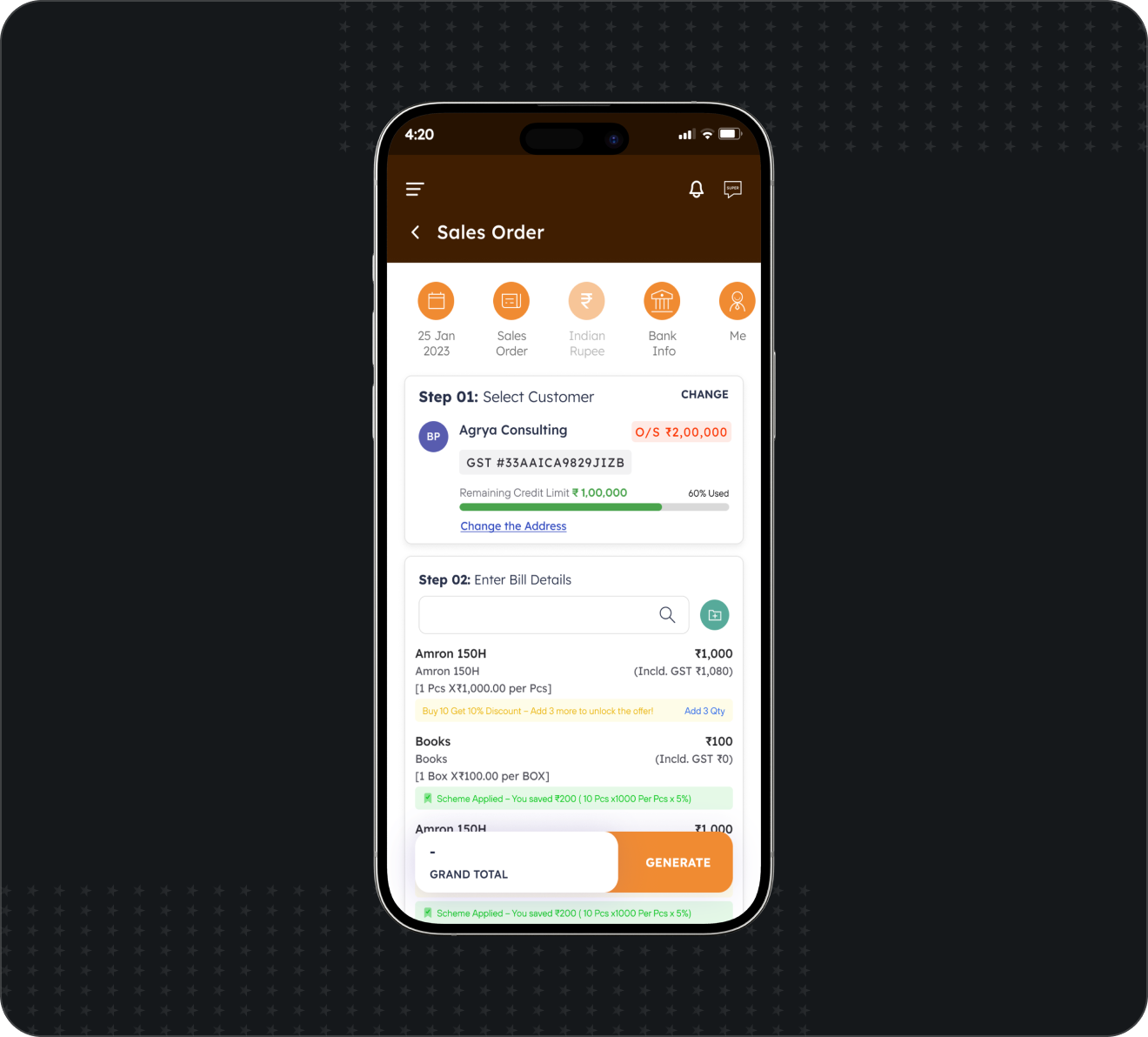
In FMCG/Pharma distribution, schemes are life. "Buy 12 cases of SKU A, get 3% off, plus 1 unit of SKU B free, provided payment is in 7 days."
Cloud ERP Reality: Most generic ERPs cannot handle this logic out-of-the-box. You have to hire a Python developer to write custom scripts. This creates "Technical Debt."
The Tally + Effortless Reality: Tally is built for this. And Effortless extends this to the field. When your sales rep opens the mobile order-taking app, the schemes are auto-applied based on the Tally master data. There is no manual calculation.
The "Credit Lock" Blind Spot:
Indian B2B trade runs on credit. Controlling "Days Sales Outstanding" (DSO) is survival.
Cloud ERP Reality: Most Cloud ERPs have binary credit limits (Block/Unblock). They struggle with bill-by-bill aging logic in real-time.
The Effortless Reality: Effortless reads the live "Bill-wise Details" from Tally. It allows for nuanced control—e.g., "Block orders if more than 3 bills are >45 days overdue." This is critical Cash flow management software for MSMEs India.
4. Failure Point #3: The "Disruption" Death Valley
The Cost of Change Management:
The biggest hidden cost of ERPNext vs Tally or Odoo vs Tally India comparisons is the Migration Period.
Data Migration: Moving 10 years of financial history from Tally to SQL-based ERPs is a nightmare. Opening balances rarely match.
User Revolt: Your accountants, who have used Tally for 20 years, will actively resist the new system. They will run Tally in parallel "just to be safe," creating a Double Entry monster.
The Dip: In the first 6 months of a Cloud ERP migration, business velocity typically drops by 30% as the team struggles with the new learning curve.
The Consultant’s Verdict:
Why pay ₹20 Lakhs and suffer 6 months of disruption to move to a system that makes your accountants slower?
The smart strategy is not to replace Tally but to augment it.
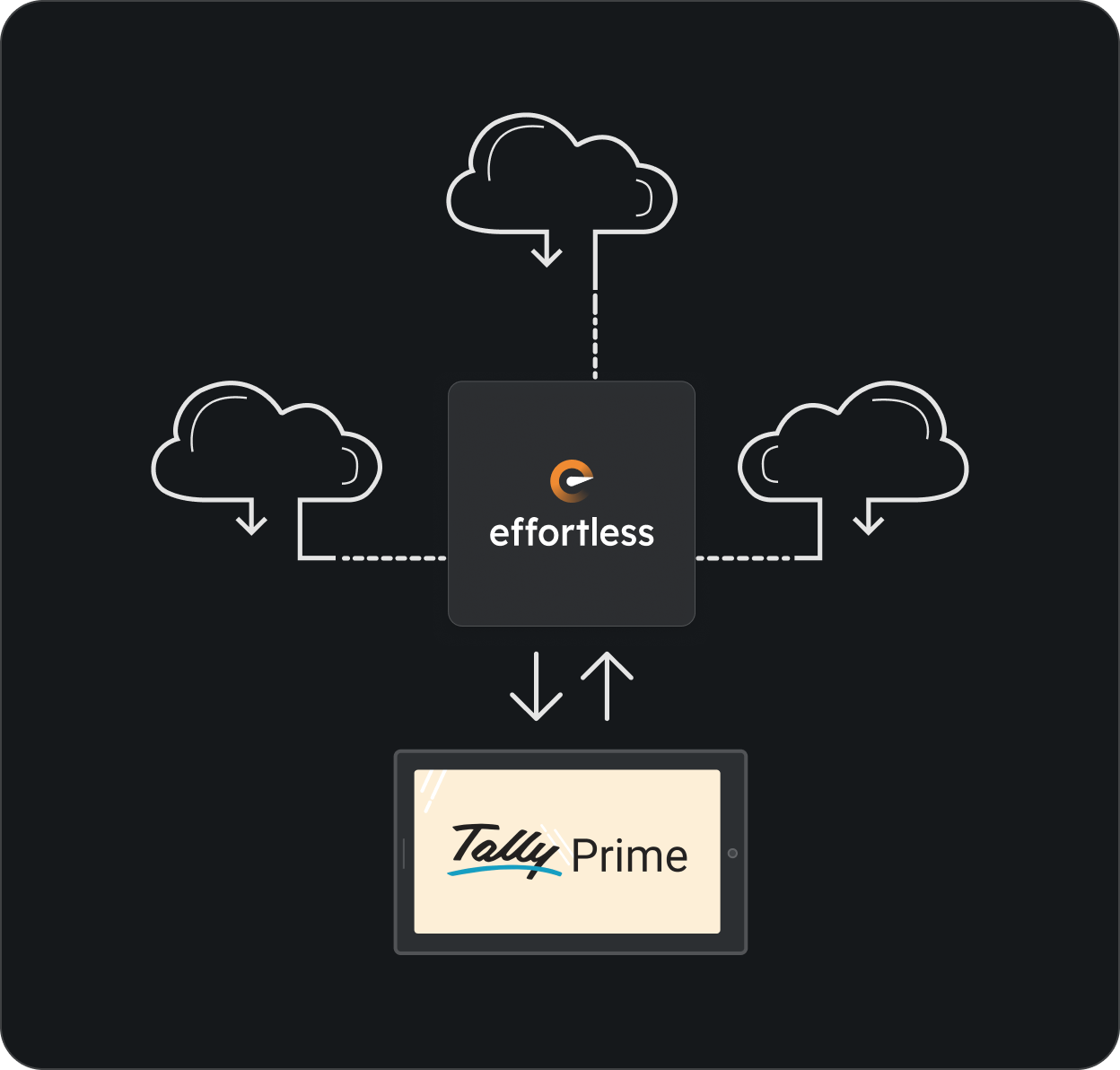
5. The Alternative: The "Two-Speed Architecture"
Instead of a monolithic migration, successful Indian SMEs are adopting a Two-Speed Architecture.
Layer 1: The System of Record (Tally Prime).
Keep your finance team here. It is fast, compliant, and universally supported by CAs.Layer 2: The System of Engagement (Effortless).
Deploy this cloud-native layer for your Sales, Operations, and Management teams.
This approach gives you the Cloud benefits (Mobile Apps, Dashboards, Automation) without the Migration costs (Disruption, Retraining).
Let's look at how this plays out across critical business functions.
Deep Dive A: Field Sales (The Revenue Engine)
The "Generic" Failure:
Generic ERP mobile apps are usually just "responsive web pages." They require strong 5G. They are clunky. They don't support high-speed order punching.
The Effortless Advantage:
Effortless provides a purpose-built field sales software that works as a sales order Android app.
Low data First: We know Indian networks. Effortless is a "low data sales app India". Your rep can scan a catalog, apply a scheme, and book an order in a basement with poor signal. It syncs later.
GPS Proof: We include a salesperson GPS tracker. You don't just get an order; you get proof of the visit.
Instant Gratification: The moment the order is synced, Effortless acts as a Tally-integrated sales app, pushing the voucher into Tally.
Billing Velocity: How to automate invoice generation and payment reminders in India? Effortless triggers the invoice generation in Tally instantly. It also acts as an App to validate GSTIN and automate e-invoicing, generating the E-Way Bill in seconds.
Result: 70–80% reduction in billing time and zero data entry lag.
Deep Dive B: Purchase & Expense (The Profit Guardian)
The "Generic" Failure:
Cloud ERPs handle standard Purchase Orders (PO) well. But they fail at the messy reality of "Petty Cash" and "Employee Claims."
Scenario: A driver buys fuel for ₹500 and gets a thermal receipt.
Cloud ERP: Requires him to log in to a web portal, navigate 5 screens, and type details. He won't do it.
The Effortless Advantage:
We focus on expense management India needs—mobile-first and simple.
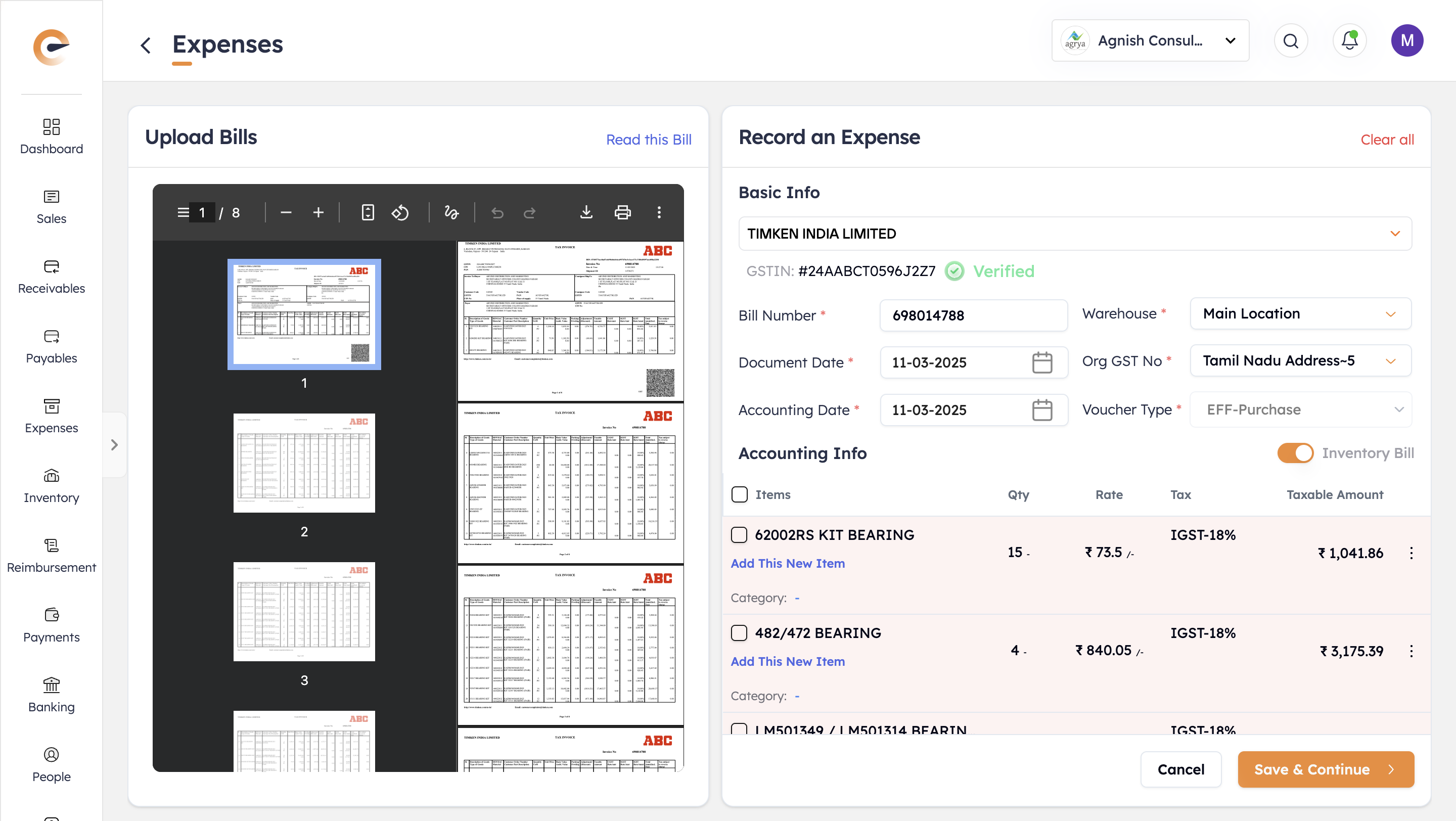
IDP Intelligence: The driver snaps a photo. Our GST invoice scanner reads the date and amount.
Compliance Check: How to avoid GST penalties through automated billing software? Effortless checks the vendor's GSTIN against the government database. If the vendor is non-compliant, it flags the claim.
Policy Engine: It checks limits (e.g., "Fuel limit ₹1000/day").
Zero Touch: Approved claims are posted as Journals in Tally automatically.
Result: Tighter fraud control, maximized Input Tax Credit (ITC), and happy employees.
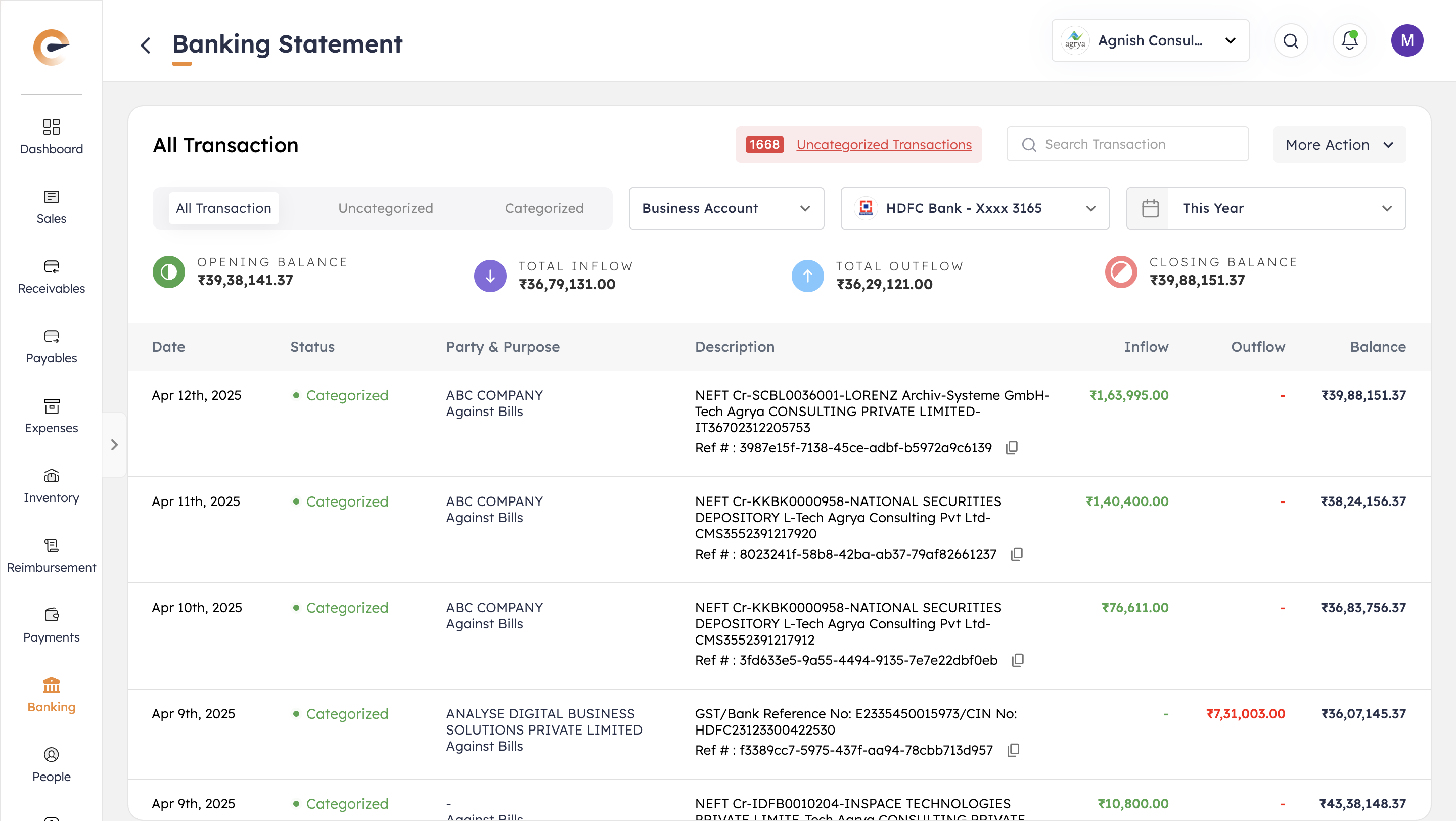
Deep Dive C: Banking & Collections (The Cash Flow)
The "Generic" Failure:
Most global ERPs assume banking is done via "File Upload." They don't integrate deeply with Indian banking stacks (ICICI/HDFC/SBI) for automated reconciliation.
The Effortless Advantage:
We bridge the gap between Tally and the Bank.
Auto-Reconciliation: How to automate bank reconciliation with Tally? Effortless fetches the bank statement via API and auto-matches it with Tally vouchers. The "Suspense Account" disappears.
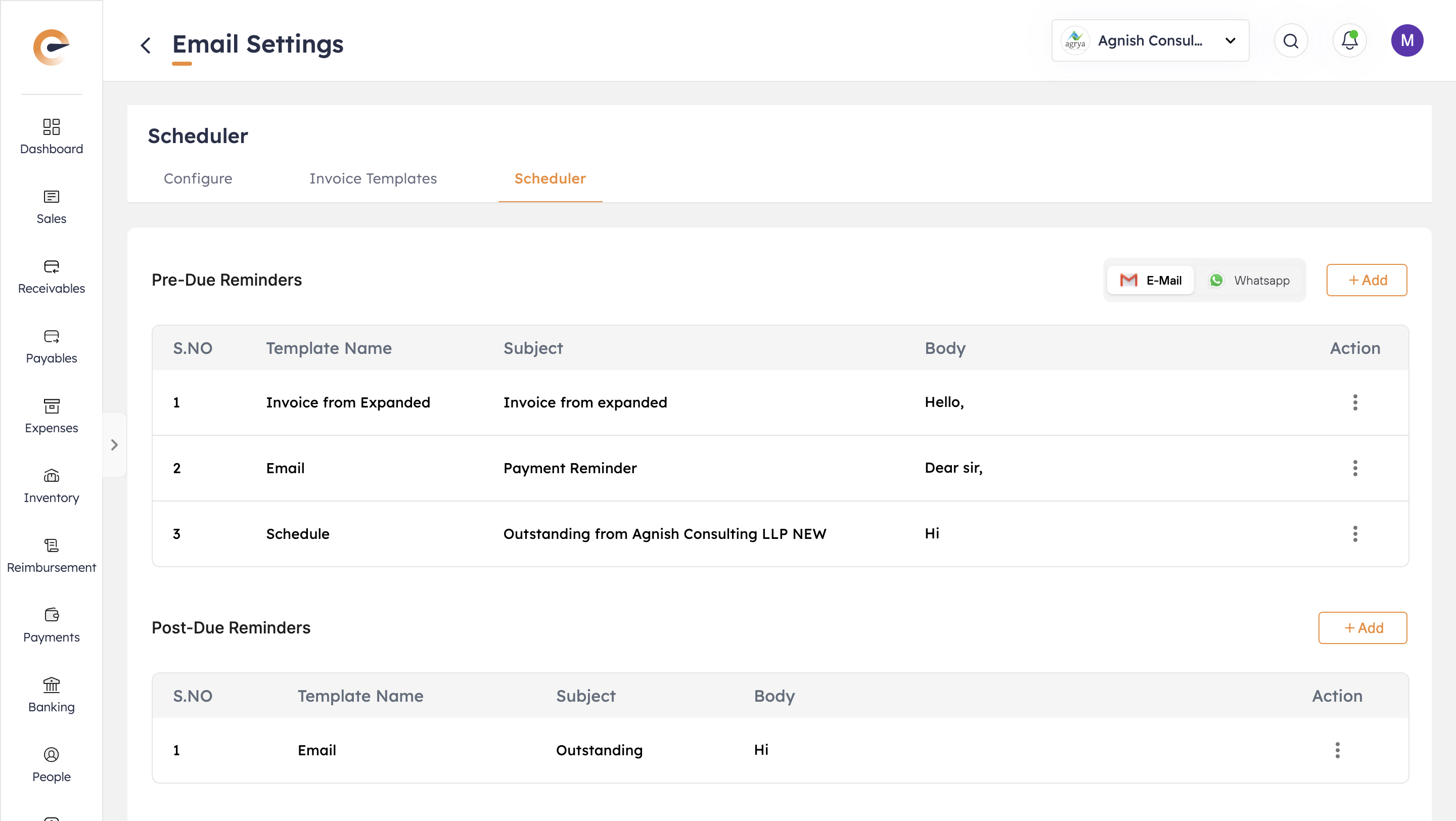
WhatsApp Collections: How to send automatic payment reminders to customers on WhatsApp? Generic ERPs send emails (which go to Spam). Effortless sends WhatsApp messages with "Pay Now" UPI links.
Virtual Accounts: We can assign virtual account numbers to customers, so incoming payments are auto-tagged to the right party.
Result: Reduced DSO (Days Sales Outstanding) and real-time cash visibility.
6. The Cost Comparison: The "Hidden" Truth
When you compare Disadvantages of cloud ERP pricing, you often see a low "Per User" fee. This is a trap.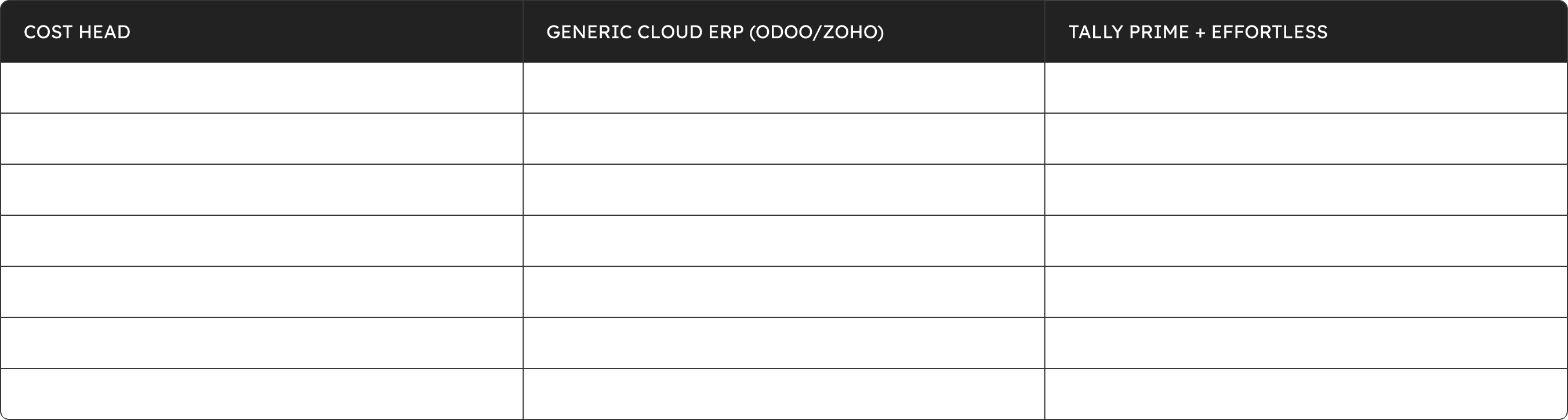
Manual billing and delayed collections drain MSMEs with hidden costs. The cost of a Cloud ERP isn't just the software; it's the cost of slowing down your business.
7. Conclusion: Don't Replace the Heart, Upgrade the Brain
For the Indian Distributor, Tally is the heart of the business. It pumps the data. It keeps the auditors alive.
Replacing the heart is a dangerous surgery.
The smarter path is to upgrade the brain. Add Effortless as the "Cortex" that handles intelligence, mobility, and automation.
Let the Sales Rep use the App.
Let the Founder use the Dashboard.
Let the Accountant use Tally.
This is the path to becoming a Digital Enterprise without the trauma of a migration.
Don't fall for the "Generic" trap. Choose the Specialized OS built for India.
Key Takeaways & FAQ
Q1: Can Effortless really replace the need for a Cloud ERP like ERPNext?
A: Yes, for 95% of mid-market trade businesses. You get the benefits of Cloud ERP (Mobile Apps, Dashboards, Remote Access, Approval Workflows) without losing the speed and compliance of Tally. You keep your "System of Record" (Tally) and upgrade your "System of Engagement" (Effortless).
Q2: Which field sales app does GST-compliant invoicing and e-way bills?
A: Effortless is a Tally-integrated GST billing software India. Unlike generic apps, it reads your Tally voucher series configuration. A field rep can generate a valid GST invoice and E-Way Bill instantly from the mobile app, fully compliant with government norms.
Q3: How to send automatic payment reminders to customers on WhatsApp?
A: Effortless includes a "Collections Engine." It tracks Tally outstandings and triggers automated WhatsApp reminders with payment links. This is far more effective than the email reminders sent by generic Cloud ERPs.
Q4: Is Effortless an low data sales app India?
A: Yes. We understand Indian connectivity. The app works in a low data environment for order taking, catalog browsing, and check-ins.
Q5: How does this help with Bank Reconciliation?
A: How to automate bank reconciliation with Tally? Generic ERPs often struggle here. Effortless connects to your corporate bank account (ICICI, HDFC, etc.), fetches the feed, and uses AI to match transactions to Tally vouchers, automating 90% of the manual work.
Suggested Reading from the Effortless Edge Blog
The ₹100 Cr Ceiling: Why Companies Stop Growing on Basic Tally
The CFO's Guide to Digital Transformation: Without Firing Your Old Accountant
MAssist vs. Effortless: The Honest Cost Comparison for Indian SMEs
The "Blind Spot" Audit: 5 operational metrics you cannot see in your Tally Profit & Loss
Growth Doesn't Wait. Why Should You?
Let Effortless help you scale—without the scramble.
Talk to Us
Have questions about how Effortless can transform your business? Our team of experts is ready to help.
- Schedule a personalized demo
- Get your specific questions answered
- Discuss your unique business challenges
We'll reach out within 4 business hours
Request Demo
See Effortless in action with a personalized demo tailored to your business.
- No generic presentations
- Focus on your specific challenges
- Get a clear picture of your potential ROI
Choose a time that works for you
Your Growth Engine Starts Here
More growth, less overhead. Discover how India's fastest growing businesses do it.
- Automate invoicing, collections & approvals
- Track sales team performance
- Get cashflow clarity in real-time
Clarity in 30 minutes. No pressure, just proof.