


Tally vs. SAP Business One: The honest cost comparison for Indian SMEs.
See the real cost in money, effort, and teams before choosing between Tally and SAP.
Executive Summary: The "Growth Paradox" of Indian MSMEs
For the Indian mid-market business (turnover ₹50 Cr – ₹500 Cr), growth brings a dangerous paradox. You have scaled your revenue, but your operational visibility has shrunk. Your sales team is on the field, your inventory is in multiple godowns, and your finance team is buried under a mountain of manual data entry.
At this "Strategic Inflection Point," every Founder and CFO faces the same dilemma: "We have outgrown Tally. Is it time to buy SAP?"
The prevailing market logic suggests that upgrading to a global ERP like SAP Business One is the inevitable rite of passage for a growing company. However, as product champions deeply embedded in the Indian MSME ecosystem, we see a different reality. Migration is not just a software change; it is a culture shock.
This blog post provides an honest, consultant-grade cost benefit analysis of Tally Prime vs. SAP Business One, exposing the hidden costs of migration and proposing a "Two-Speed Architecture" that might just save you ₹2 Crores.
The "Migration Trap": Why Companies Leave Tally (And Why They Later Regret It)
The decision to leave Tally is rarely about accounting. Tally Prime is, arguably, the world’s fastest and most compliant accounting engine for the Indian tax regime. The decision is driven by Operations:
The Sales Disconnect: "My sales reps are taking orders on WhatsApp. I have no real-time visibility."
The Control Gap: "I can't implement strict approval workflows or credit blocks in Tally."
The Data Lag: "I wait 15 days for monthly reports."
SAP promises to fix this with a unified database. But the price tag is not just the license fee—it is the Disruption Cost.
The "Efficiency Tax" of Global ERPs
Here is the insider truth no ERP salesman will tell you: SAP is designed for Control, not Speed.
Your senior accountant ("Munim-ji") has spent 15 years mastering Tally’s keyboard-first interface. He can post 300 vouchers in an hour. When you move him to a mouse-heavy, web-based ERP interface, his speed drops by 40-60%. This "Efficiency Tax" frustrates your finance team, leads to a backlog, and often forces companies to hire more staff just to feed the new ERP.
The Honest Cost Matrix: CAPEX vs. OPEX
Let’s break down the Total Cost of Ownership (TCO) over 5 years for a typical mid-sized trading or manufacturing company with 20 office users and 50 field staff.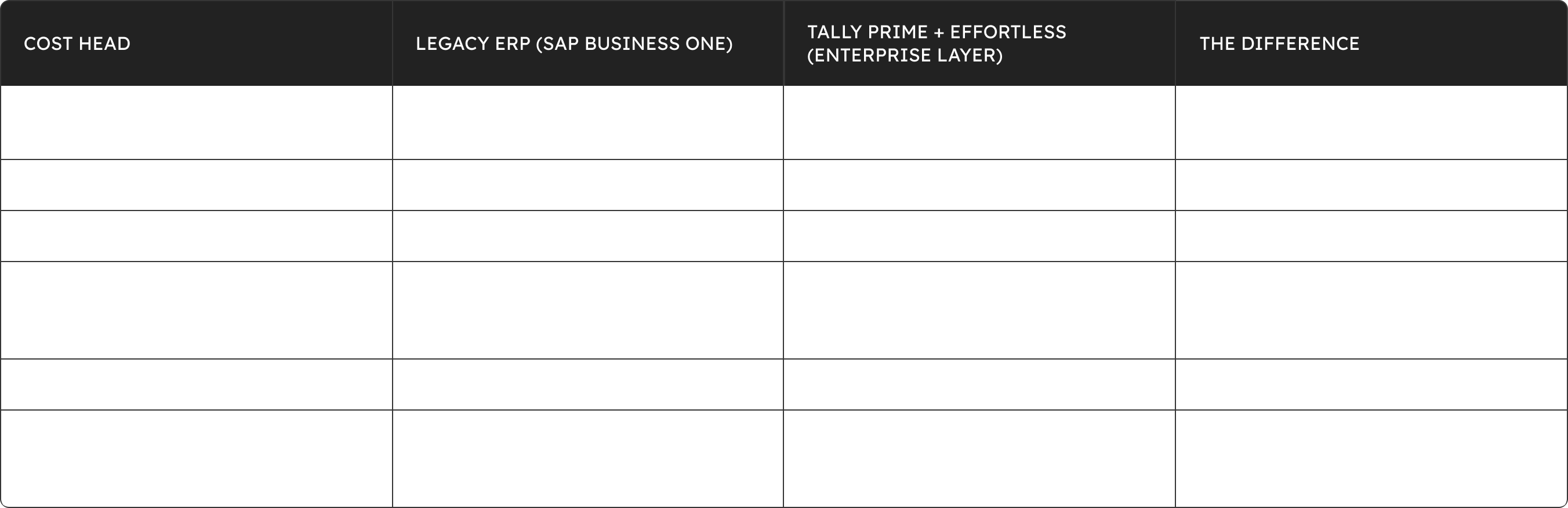
The Verdict: A typical SAP implementation drains ₹1.5 Cr to ₹2.5 Cr over 5 years. A Tally + Effortless stack costs less than ₹20 Lakhs. The question is: Does the ERP give you 10x more value?
Operational Deep Dive: The "Two-Speed" Alternative
Instead of ripping out Tally, smart Indian companies are adopting a Two-Speed Architecture:
Speed 1 (The Core): Keep Tally for what it does best—Audit, GST Compliance, and Banking.
Speed 2 (The Edge): Layer Effortless on top to handle the chaos of Field Sales, Expenses, and Approvals.
Here is how this hybrid stack outperforms the monolithic ERP across three critical domains:
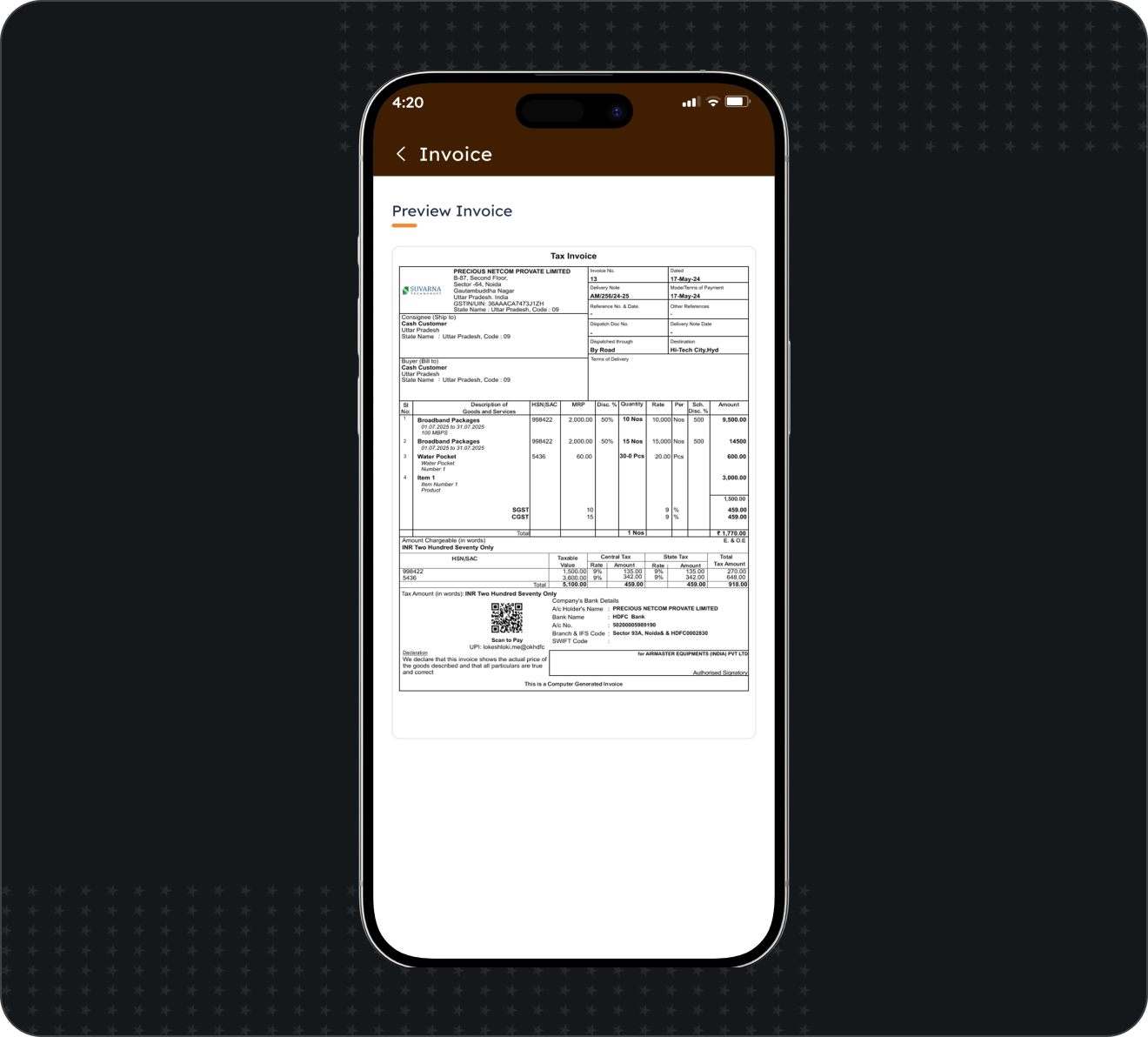
1. The Revenue Engine: Field Sales & Street Selling
SAP’s mobile apps are often clunky add-ons. In contrast, Effortless offers a Tally-integrated sales app designed for the Indian "Fleet on Street."
The Problem: Sales reps struggle with network issues and lack data.
The Effortless Fix: Our mobile order-taking app works on low data & clean (rep specific simple indianized interface). A rep can create a quote, convert it to an order, and generate a GST-compliant invoice while standing at the retailer’s shop—even in a basement with no signal.
Unique Value: It validates credit limits in real-time. If a customer has overdue bills, the field sales software blocks the new order automatically. No more bad debts.
Local Context: Sales teams need simplicity. They want to know: "How to send an invoice via WhatsApp after a sale?" Effortless automates this—triggering a PDF invoice with a UPI QR immediately upon approving.
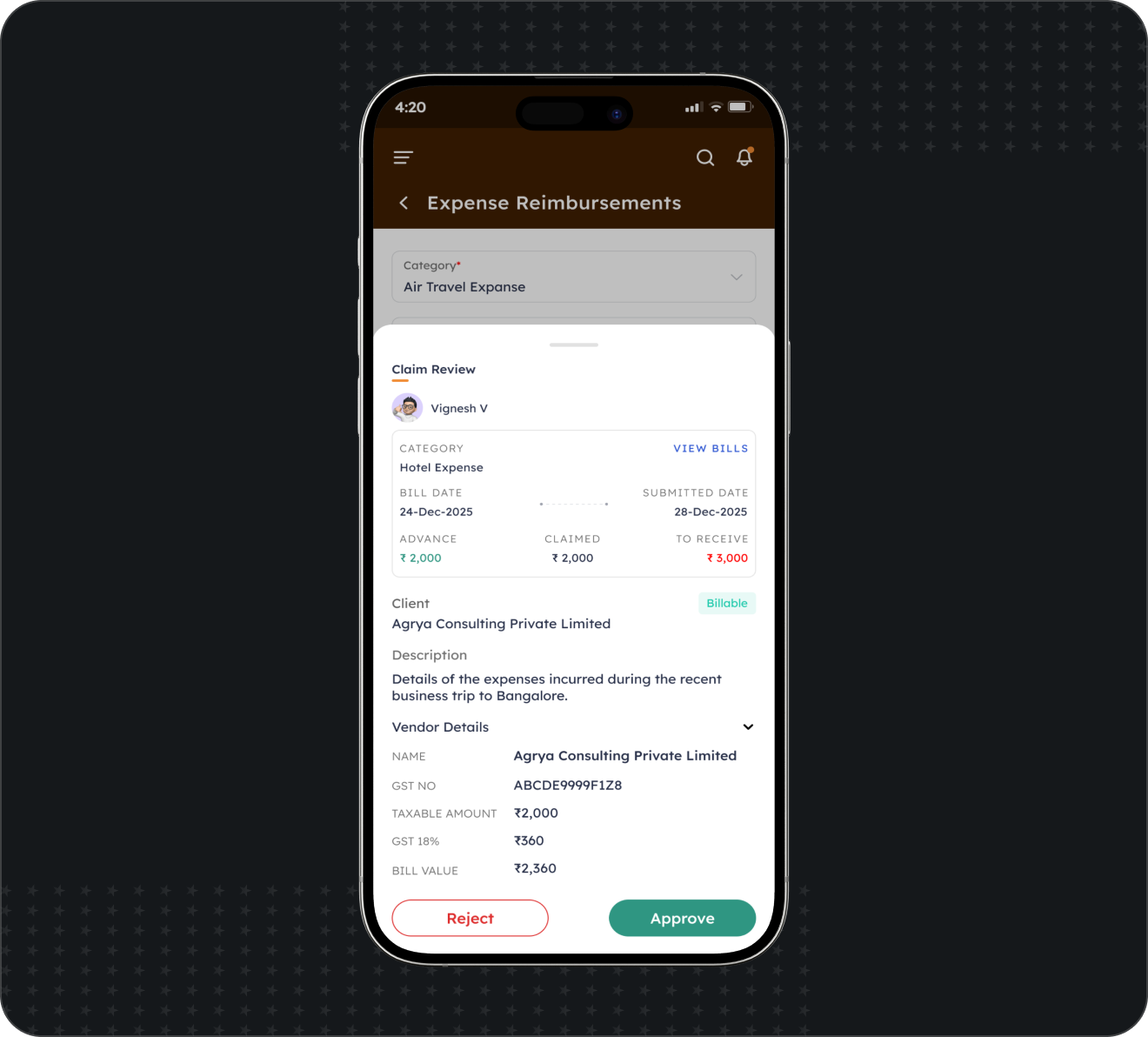
2. The Profit Guardian: Purchase & Expense Management
Manual billing and delayed collections drain MSMEs with hidden costs — from GST errors to cash flow crunches. Discover how Effortless automates invoicing, reminders, and Tally sync for faster, error-free collections.
The Problem: "Kaccha" bills, lost receipts, and unclaimed Input Tax Credit (ITC).
The Effortless Fix: Use our mobile bill booking app. An employee snaps a photo of a lunch bill or vendor invoice. The system’s GST invoice IDP (intelligent Data processor) scanner extracts the GSTIN, validates it against the government portal to ensure the vendor is compliant, and auto-calculates TDS.
Control: You can set policy-based expense rules (e.g., "Limit lunch spend to ₹500"). The app rejects non-compliant claims instantly, enforcing multi-level approval software logic before the data ever touches Tally.
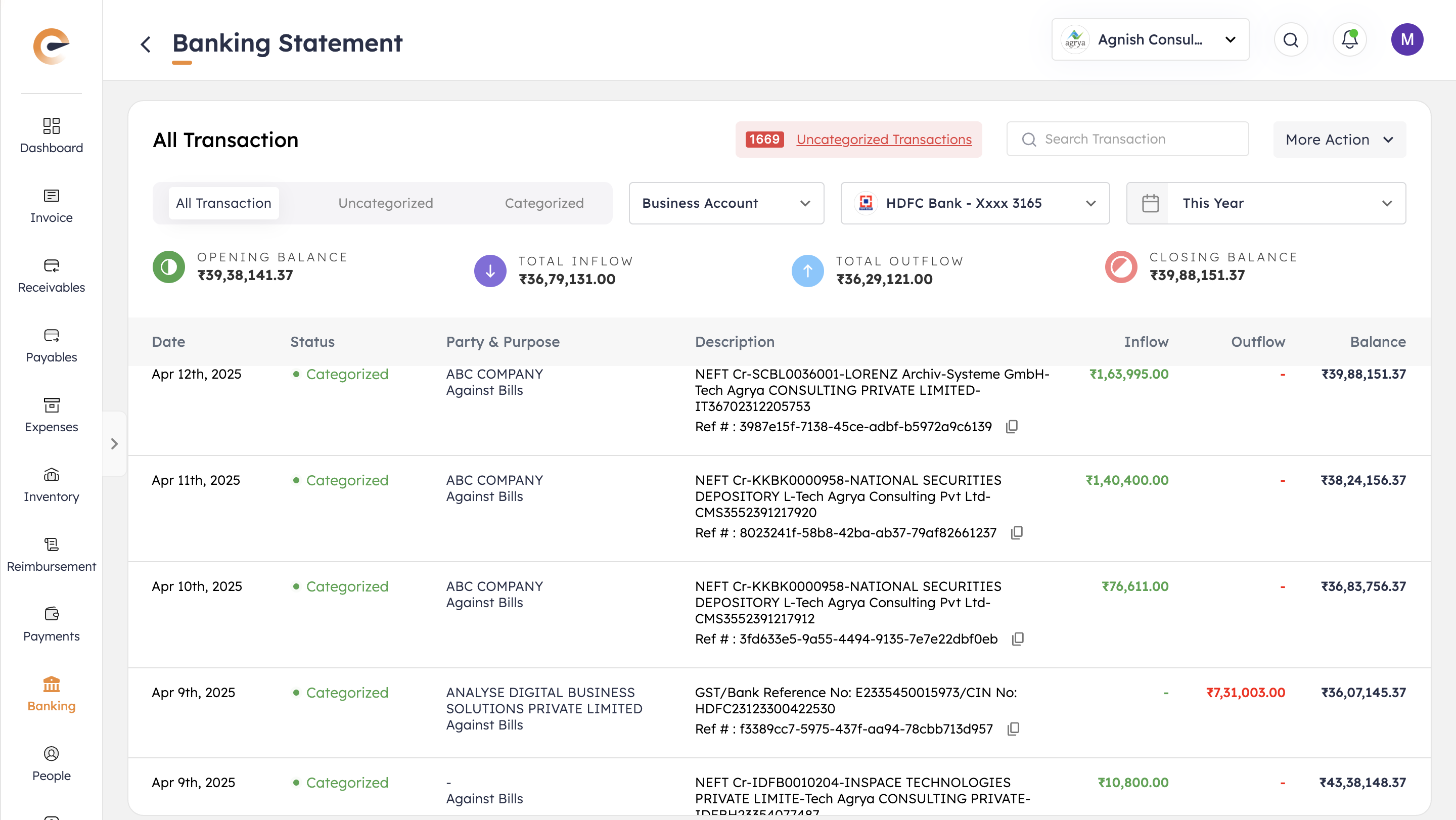
3. The Treasury Hub: Banking & Cash Flow
SAP requires complex integration with banking servers. Effortless brings cash flow management software for MSMEs India directly to your mobile.
The Problem: Reconciliation is a month-end nightmare.
The Effortless Fix: How to automate bank reconciliation with Tally? Effortless fetches bank statements automatically and uses AI to match them with Tally vouchers.
Collections: Instead of chasing clients manually, our automated invoice reminders send WhatsApp/SMS nudges with "Pay Now" links. This reduces Days Sales Outstanding (DSO) by 15-20%.
Strategic Recommendation: Don’t Migrate. Integrate.
If you are a subsidiary of a German MNC, buy SAP. It is great for global consolidation.
But if you are a high-growth Indian MSME, do not fire your accountant or ditch Tally.
The "Effortless" approach allows you to scale to ₹500 Cr without the trauma of migration. You get the best of both worlds:
For the CFO: The security and compliance of Tally Prime.
For the CEO: The visibility and control of an ERP.
By choosing integration over migration, you avoid the ₹2 Crore "Growth Tax" and keep your business agile.
Key Takeaways
Cost Reality: SAP/Oracle implementations often cost 10x more than projected due to hidden infrastructure, AMC, and training costs.
The "Efficiency Tax": Moving from Tally’s keyboard interface to a mouse-based web ERP can drop finance team productivity by 40%.
Two-Speed Architecture: Use Tally for the financial core and Effortless for operational workflows (Sales, Expenses, Approvals).
Automation Wins: Features like automatic payment reminders on WhatsApp and GSTIN validation directly improve cash flow and reduce compliance risk.
Zero Disruption: Tally integration software allows you to "go live" in 7 days, compared to 12 months for a legacy ERP.
FAQ: Common Questions from Indian Founders
Q1: How to automate invoice generation and payment reminders in India?
A: You don't need a full ERP. Effortless acts as a Tally-integrated GST billing software India that automatically generates e-invoices and sends them via WhatsApp/Email with embedded payment UPI QRs or Payment links as soon as a sale is booked.
Q2: Which field sales app does GST-compliant invoicing and e-way bills?
A: Effortless is designed for this. It is a mobile app with offline capabilities that allows sales reps to generate GST invoices and E-Way Bills on the spot, syncing data to Tally once connectivity is restored.
Q3: How to send automatic payment reminders to customers on WhatsApp?
A: Our system tracks your receivables ledger. You can configure it to send automated, professional reminders (with the invoice PDF and payment link) to customers on WhatsApp based on the due date.
Q4: How can my sales team take orders on low data and sync?
A: The Effortless sales app works on low data & storage on device. Your team can continue booking orders and checking stock in remote areas. The app auto-syncs with Tally the moment it detects Tally gets connected to internet access.
Q5: Is there an app to validate GSTIN and automate e-invoicing?
A: Yes. Effortless has a built-in GST invoice scanner and validation engine. It checks the vendor’s filing status in real-time to ensure you only claim valid Input Tax Credit (ITC).
Suggested Reading from the Effortless Blog:
The ₹100 Cr Ceiling: Why Companies Stop Growing on Basic Tally
The CFO's Guide to Digital Transformation: Without Firing Your Old Accountant
Stop the Leakage: 5 Ways Manual Expense Claims Cost You 4% of Revenue
Growth Doesn't Wait. Why Should You?
Let Effortless help you scale—without the scramble.
Talk to Us
Have questions about how Effortless can transform your business? Our team of experts is ready to help.
- Schedule a personalized demo
- Get your specific questions answered
- Discuss your unique business challenges
We'll reach out within 4 business hours
Request Demo
See Effortless in action with a personalized demo tailored to your business.
- No generic presentations
- Focus on your specific challenges
- Get a clear picture of your potential ROI
Choose a time that works for you
Your Growth Engine Starts Here
More growth, less overhead. Discover how India's fastest growing businesses do it.
- Automate invoicing, collections & approvals
- Track sales team performance
- Get cashflow clarity in real-time
Clarity in 30 minutes. No pressure, just proof.