


Stop Being the Bad Guy: Letting Software Enforce Your Travel Policy
Remove manual policing. Let the system enforce travel policy automatically.
Executive Summary: The Emotional Cost of Expense Approvals
In the hierarchy of corporate tasks, "approving employee expenses" ranks as one of the most universally disliked responsibilities for any manager.
It is an emotional minefield (KGF!).
When a field sales rep submits a travel claim containing a ₹800 dinner bill, and the company policy strictly limits dinner to ₹500, the manager is forced into a difficult position. If they approve it, they violate company policy and draw the ire of the CFO. If they reject it, they become the "Bad Guy," risking the demotivation of a top-performing salesperson over a relatively small amount of money.
This friction creates a culture of "Quiet Approvals"—managers silently accepting padded bills just to avoid conflict. In Indian mid-market enterprises (₹50 Cr – ₹1000 Cr), this seemingly small behavioral flaw scales into a massive financial leak, often costing 2-4% of total revenue in unchecked indirect expenses.
This blog post explores the psychological and operational burden of manual expense management. We analyze how adopting an employee expense claim app equipped with a rigid "Policy Engine" (like Effortless) removes the human element from rejection. By shifting the blame to the software, you protect your managers' relationships with their teams while absolutely securing your bottom line.
1. The Psychology of the Padded Bill
To solve expense leakage, you must first understand why it happens. It is rarely grand theft; it is usually incremental rationalization. Lets understand few realities that we have seen across thousands of our customers:
The Field Rep's Reality:
A salesperson travels to a Tier-2 city. It’s raining. They can't find a hotel within the ₹2,000 policy limit, so they book one for ₹2,500. They rationalize: "I closed a ₹5 Lakh deal today; the company won't mind an extra ₹500."
The Manager's Reality:
The manager receives the claim at the end of the month, buried in a pile of 50 other chits and WhatsApp photos. They see the ₹2,500 bill. They know the limit is ₹2,000.
Option A (Reject): The manager has to call the rep, explain the policy, ask them to resubmit, and listen to the rep complain about the rain and the hard work they did.
Option B (Approve): The manager signs the paper. It takes two seconds. The conflict is avoided.
In 90% of manual setups, Option B wins. The manager chooses peace over policy. This is why Manual billing and delayed collections drain MSMEs with hidden costs. The drain isn't just external (customers paying late); it is internal (employees overspending quietly).
2. The Failure of the "Memo" Strategy
How do finance teams usually try to fix this? They send an angry email.
"Dear All, Please be reminded that the daily food allowance is strictly ₹500. Any claims exceeding this will not be processed." warmest regards, finance team 😀
This approach fails because a memo is a "Soft Control." It relies on human memory and human confrontation to enforce it. When the finance team receives the approved (but policy-violating) bill from the Sales Manager, they now have to argue with the Sales Manager.
You have simply moved the conflict from the "Manager vs. Employee" level to the "Finance vs. Manager" level.
To achieve true change management finance teams desire, you must remove the human confrontation entirely. You need a "Hard Control."
3. The Effortless Solution: The Policy Engine as the "Sweet Bad Cop"
The most effective way to enforce a rule is to make breaking it physically impossible within the system.
With Effortless, we treat expense management India requirements not as a data entry task, but as a governance workflow. Here is how the Policy Engine shifts the dynamic:
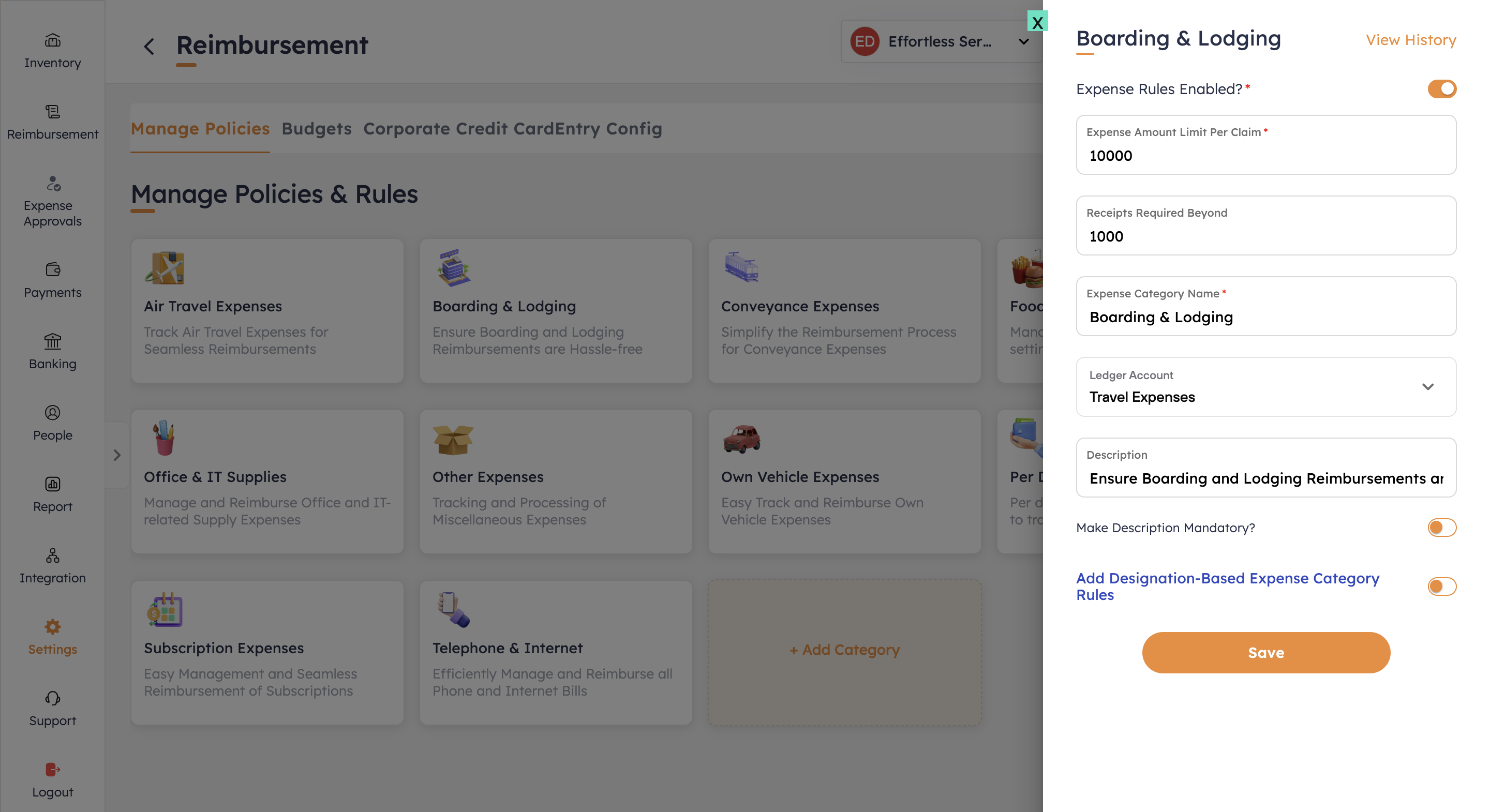
Step 1: The Code Replaces the Memo
Instead of sending an email, the CFO configures the rules directly into the Effortless platform.
Rule: Designation = "Sales Executive". Category = "Meals". Limit = "₹500/day".
Rule: Designation = "Area Manager". Category = "Hotel". Limit = "₹3,000/night".
Step 2: The IDP Interception
The sales rep finishes dinner (Bill: ₹800). They open the mobile bill booking app and snap a photo.
The Effortless IDP (Intelligent Document Processing) engine kicks in. It doesn't just read the text; it categorizes it. It identifies the amount as ₹800.
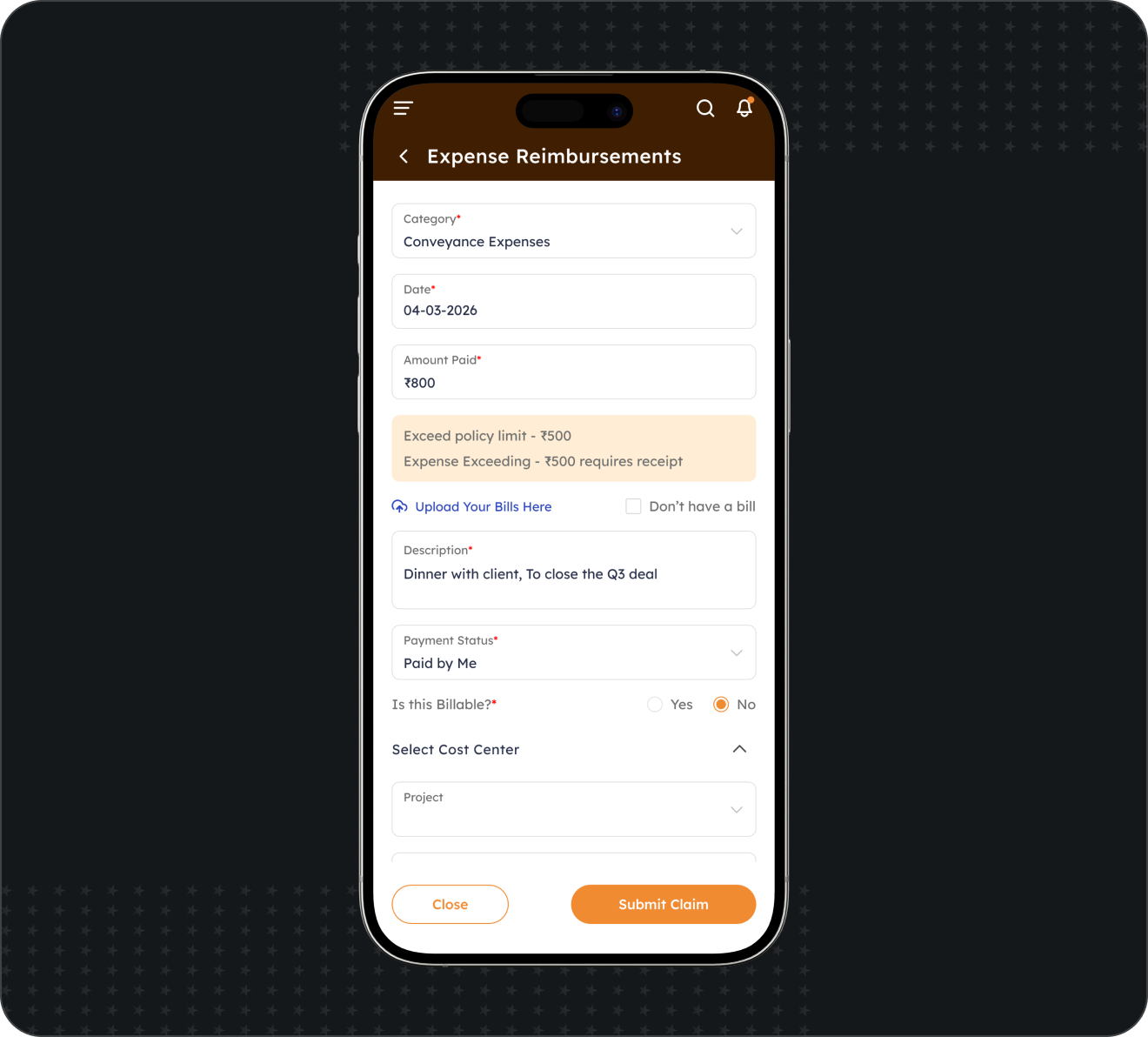
Step 3: The Automated Rejection (The "Software Said No" Moment)
Before the claim is even routed to the manager, the Effortless Policy Engine evaluates the data against the rules.
Logic: Amount (₹800) > Limit (₹500).
Action: The app instantly displays a hard-stop notification to the employee: "Claim Exceeds Policy Limit of ₹500. Please revise amount or request Special Exception."
The Psychological Shift:
The manager didn't reject the bill. The system rejected the bill. The manager remains the supportive coach; the software becomes the impartial referee. The employee cannot argue with an algorithm.
4. Managing the "Valid Exception"
Business is not always black and white. Sometimes, the ₹800 dinner was justified (e.g., they had to take a client out). A rigid system that allows zero flexibility will frustrate your best performers.
The Effortless Workflow for Exceptions:
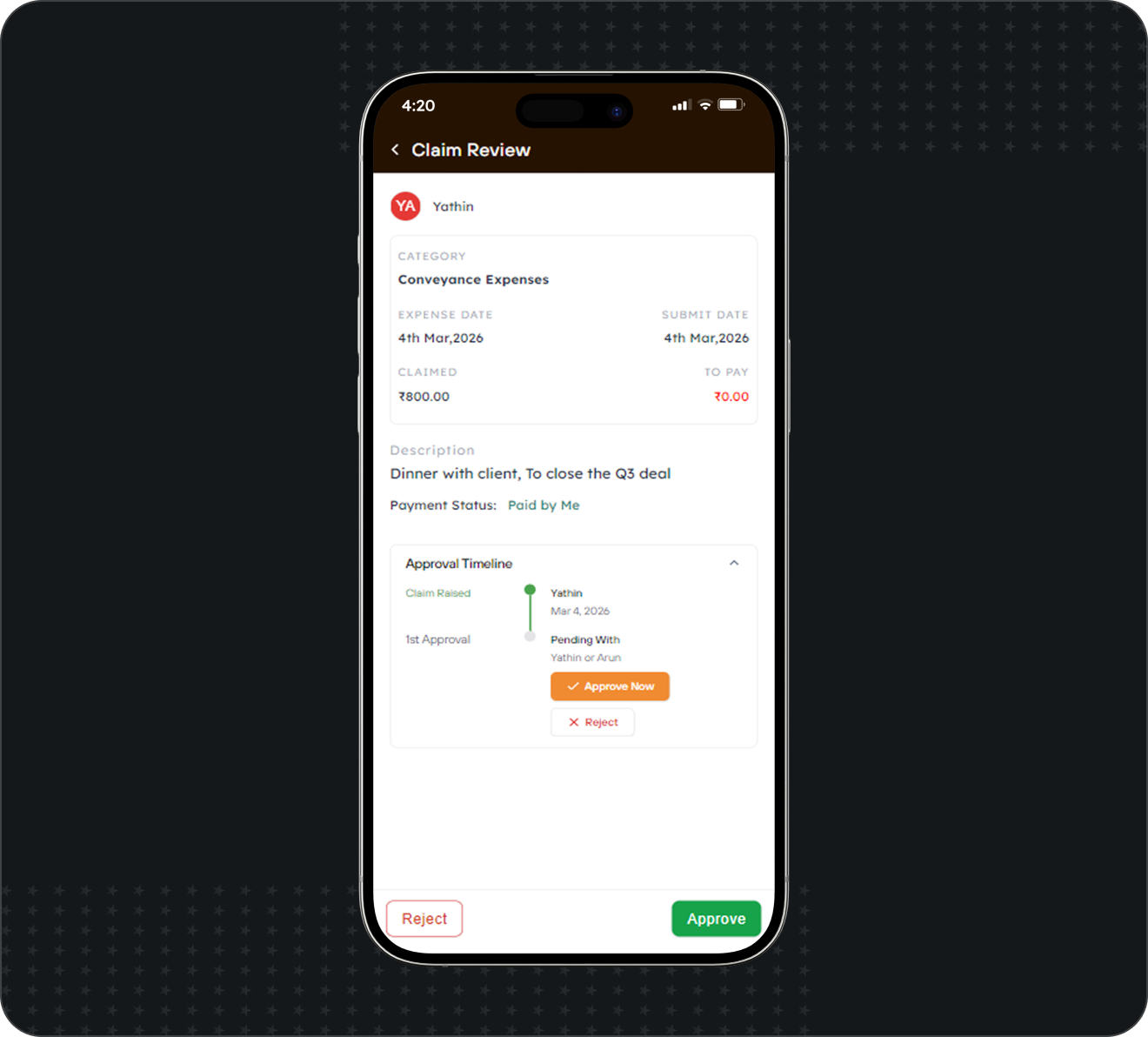
If the employee believes the overspend is justified, they can hit "Request Exception" and add a mandatory note (e.g., "Dinner with Client X to close Q3 deal").
Now, the claim moves to the manager. But the context has changed.
The manager isn't deciding whether to catch a policy violation; the system already caught it. The manager is deciding whether to authorize a strategic investment.
This utilizes purchase approval workflow mechanics for micro-expenses. It forces the employee to justify the spend, which drastically reduces frivolous overspending.
5. The "GST Check": The Second Layer of Rejection
Overspending isn't the only reason a manager should reject a bill. Compliance is even more if not equally critical.
In a manual process, an employee might submit a handwritten restaurant bill (a "Kaccha" bill). The manager approves it because it fits the ₹500 limit. However, when it reaches Finance, they realize there is no valid GSTIN. The company loses the Input Tax Credit (ITC).
The Effortless "Compliance Guard":
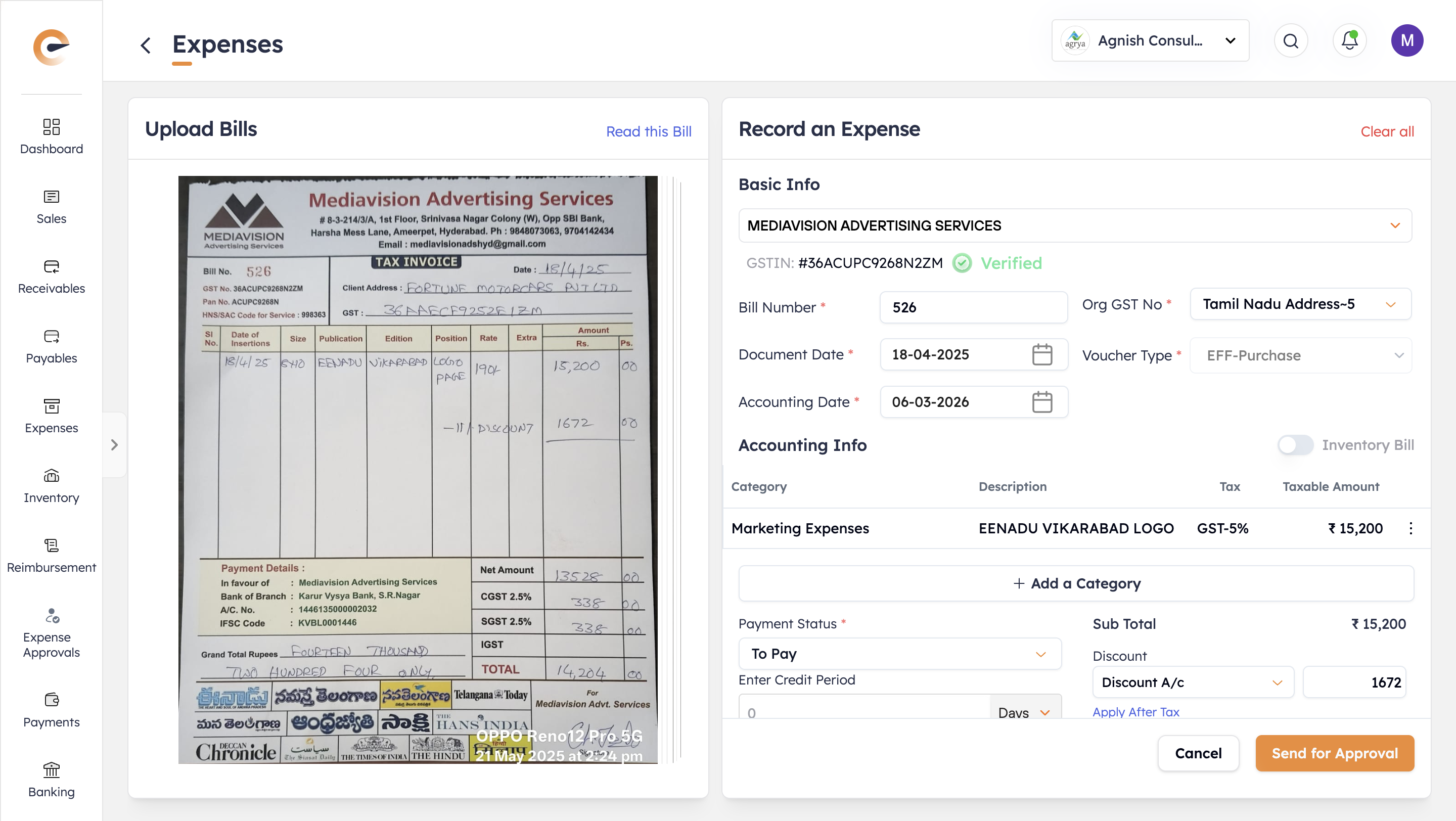
Effortless functions as an App to validate GSTIN. When the employee snaps the photo of the bill, the IDP extracts the GSTIN and pings the government portal in real-time.
If the vendor is unregistered or a defaulter, the app flags it: "Warning: Vendor GSTIN Invalid. ITC cannot be claimed."
This is exactly How to avoid GST penalties through automated billing software.
Again, the software does the policing. It trains your employees to ask for "Pakka" (legitimate) bills because they know the app will reject the fake ones.
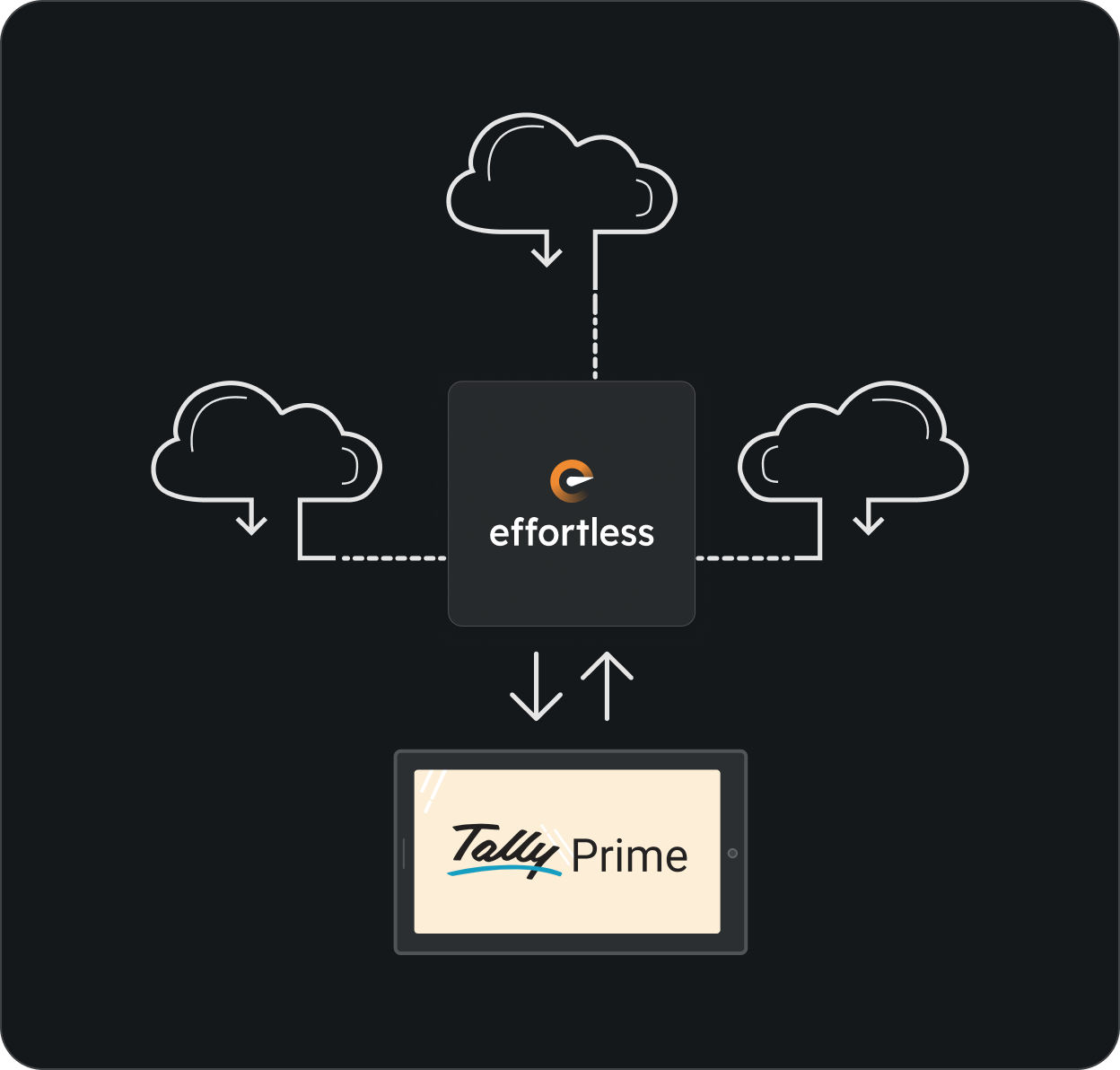
6. The Final Mile: Zero-Touch Tally Sync
Once a claim passes the Policy Engine and is approved by the manager (if an exception was requested), the friction for the Finance team is completely eliminated.
The Integration:
Effortless is a Tally-integrated GST billing software India solution.
The approved expense claim does not need to be re-typed. It syncs directly into Tally Prime as a Journal Voucher, accurately mapped to the correct expense ledger (e.g., "Travel & Conveyance") and the correct cost center.
Your senior accountants stop acting as data entry clerks and start acting as financial analysts.
7. Conclusion: Preserve Your Culture, Protect Your Cash
You hired your Sales Managers to close deals and motivate their teams. You did not hire them to audit lunch receipts.
When you force managers to act as the "Expense Police," you damage the trust between leadership and the field force. Software user adoption strategies fail when the software creates conflict.
By deploying the Effortless Policy Engine, you remove the emotion from expense management. You establish clear, unbreakable boundaries defined by code. You stop the 4% leakage in your P&L, you ensure 100% GST compliance, and most importantly, you let your managers go back to being the "Good Guys."
Key Takeaways & FAQ
Q1: Can I set different limits for different cities?
A: Yes. The Effortless policy engine allows for complex, multi-variable rules. You can set a hotel limit of ₹4,000 for Metro cities (Mumbai/Delhi) and ₹2,000 for Tier-2 cities, ensuring the system adapts to the reality of the geography.
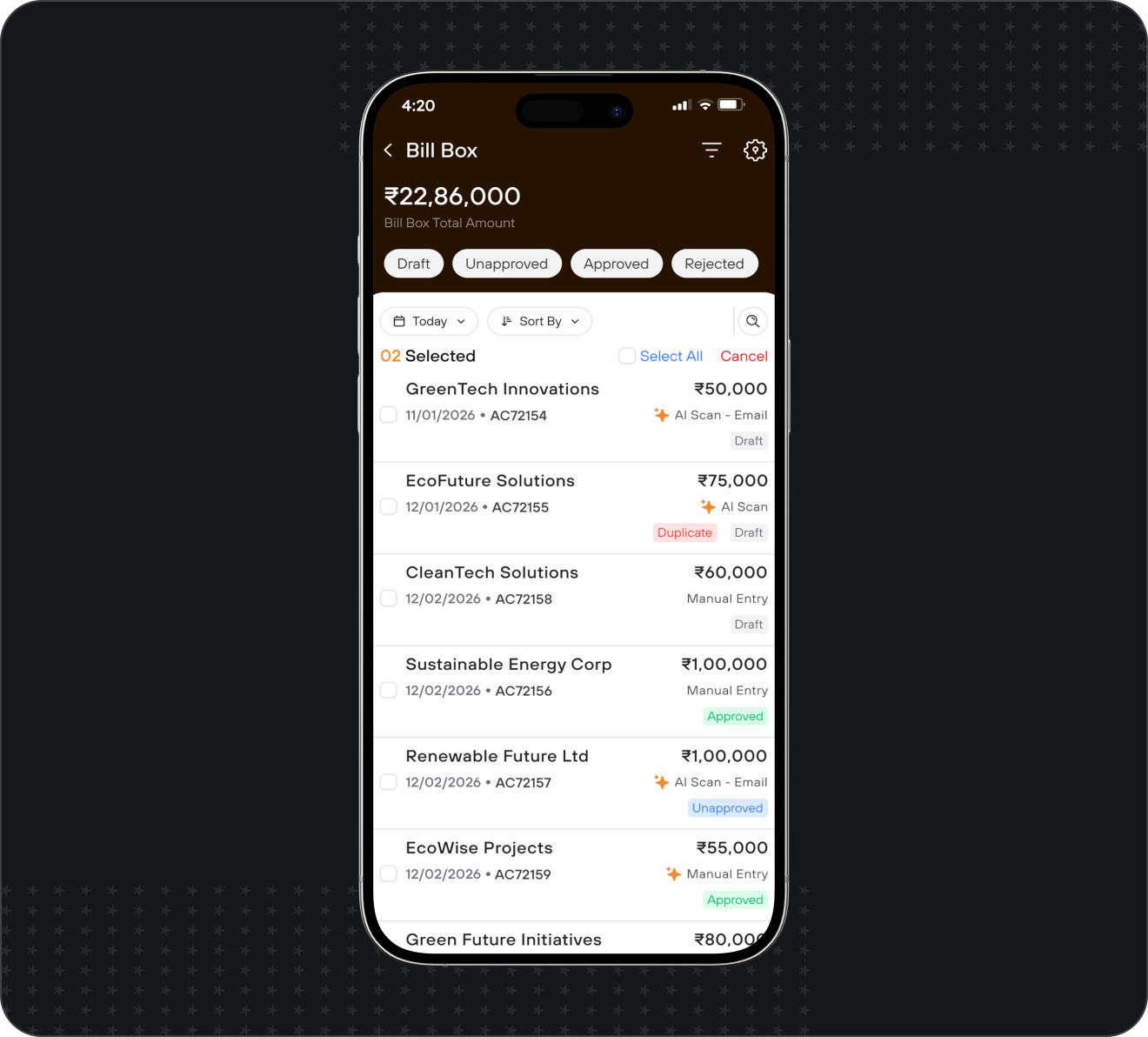
Q2: What happens if an employee tries to submit the same bill twice?
A: The Effortless IDP engine includes robust duplicate detection. It scans the invoice number, date, and amount against the historical database. If an employee tries to upload a bill they already claimed last month, the system auto-rejects it instantly.
Q3: How does this workflow integrate with our existing Tally setup?
A: Effortless features native, bi-directional sync. All expense ledgers, employee masters, and cost centers are pulled from Tally. When an expense is fully approved through our multi-level approval software, it is pushed back into Tally as a finalized voucher, requiring zero manual entry by your accountant.
Q4: Can this handle petty cash for branch offices?
A: Yes. We offer comprehensive petty cash tracking. A branch manager can be assigned a digital float. As they approve expenses via the app, the float is depleted in real-time, giving the Head Office immediate visibility into branch-level spending.
Q5: Is it difficult for employees to use the app?
A: Not at all. The employee expense claim app is designed to be as simple as sending a photo on WhatsApp. They take a picture, the AI extracts the data, they review it, and hit submit. High user adoption is built into the design.
Suggested Reading from the Effortless Edge Blog
Stop the Leakage: 5 Ways Manual Expense Claims Are Costing You 4% of Revenue – A deeper dive into the specific financial losses caused by paper chits.
Reading vs. Understanding: The Real Difference Between OCR and IDP – How the AI actually reads and validates the bills your employees submit.
The "Maker-Checker" Shield: Protecting Your Tally Data from Unauthorized Edits – How to structure approvals securely.
The ₹100 Cr Ceiling: Why Companies Stop Growing on Basic Tally (And How to Fix It) – Why manual processes eventually break down.
Tired of fighting over lunch bills?
[Book a Policy Engine Demo] and see how Effortless automates your expense rules today.
Growth Doesn't Wait. Why Should You?
Let Effortless help you scale—without the scramble.
Talk to Us
Have questions about how Effortless can transform your business? Our team of experts is ready to help.
- Schedule a personalized demo
- Get your specific questions answered
- Discuss your unique business challenges
We'll reach out within 4 business hours
Request Demo
See Effortless in action with a personalized demo tailored to your business.
- No generic presentations
- Focus on your specific challenges
- Get a clear picture of your potential ROI
Choose a time that works for you
Your Growth Engine Starts Here
More growth, less overhead. Discover how India's fastest growing businesses do it.
- Automate invoicing, collections & approvals
- Track sales team performance
- Get cashflow clarity in real-time
Clarity in 30 minutes. No pressure, just proof.