


IPO Ready: How to Prepare Your Financial Data for Due Diligence Using “Tally Prime + Effortless”
What breaks during IPO audits, and how to fix it before diligence starts.
Executive Summary: The "Governance" Gap
The Indian SME IPO market is witnessing a historic boom. With the NSE Emerge and BSE SME platforms creating wealth events for mid-market founders, the ambition to go public has shifted from "fantasy" to "roadmap" for companies with ₹50 Cr – ₹500 Cr turnover.
However, the bridge between a private limited company and a public listed entity is not "Profitability"—it is "Governance."
As a product champion at Effortless, we frequently consult with Founders and CFOs who believe they need to migrate from Tally Prime to SAP or Oracle to survive the IPO due diligence process. This is a strategic error. Migrating ERPs during an IPO preparation phase introduces "Implementation Risk," slows down operations, and costs crores.
This blog post argues that you do not need to replace Tally prime; you need to govern it. By layering an "Operating System" like Effortless on top of Tally, you can achieve the "Audit-Grade" data integrity required by SEBI and Merchant Bankers without disrupting your business.
1. The "Due Diligence" Trap: What Auditors Actually Look For
When a Merchant Banker or Big 4 Auditor steps into your office for Financial Due Diligence (FDD), they aren't just checking if your Balance Sheet tallies. They are checking if your data is defensible.
In a manual Tally environment, data is often defenseless:
Revenue Assurance: You show ₹100 Cr in sales. The auditor asks, "How do we know these aren't fake invoices created to inflate valuations?" In a manual system, you point to a pile of paper.
Expense Validity: You show ₹80 Cr in expenses. The auditor asks, "Did the Board approve this ₹2 Cr vendor contract before the invoice was paid?" In Tally, there is no record of "Approval"—only the final payment.
Compliance: You claim 100% GST compliance. The auditor finds you claimed Input Tax Credit (ITC) for a blacklisted vendor.
The Consultant’s View 💡:The IPO is often delayed not because the business is bad, but because the "Information Asymmetry" between the Founder (who knows it's real) and the Auditor (who needs proof) is too high.
2. Pillar 1: Revenue Assurance (The "Proof of Work")
The IPO Risk: "Inflation of Revenue" is the #1 red flag for SEBI. If your sales process relies on WhatsApp orders and manual billing, you have no digital audit trail to prove the sale was genuine.
The Tally prime Limitation: Tally records the Voucher (the accounting entry). It does not record the Event (the customer interaction).
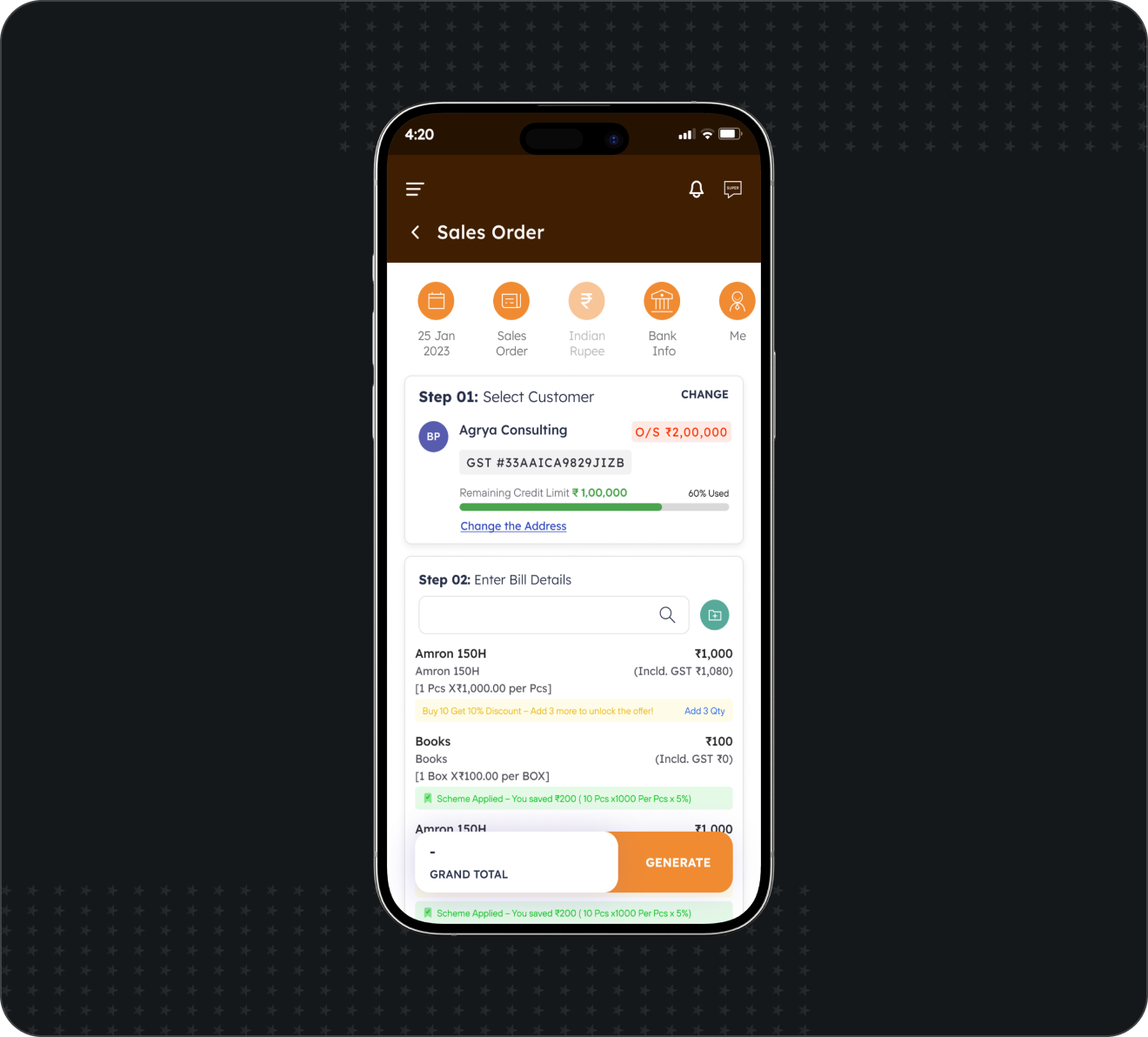
The Effortless Solution: The Digital Chain of Custody To survive scrutiny, you need a field sales software that acts as a digital witness.
GPS "Proof of Visit": When a sales rep books an order in the Effortless mobile order-taking app, the system logs the GPS coordinates. This proves the "Fleet on Street" actually visited the customer.
The "Credit Lock": Effortless reads the credit limit from Tally in real-time. It blocks orders for defaulting customers automatically. This proves to auditors that your "Receivables Quality" is system-driven, not human-dependent.
Instant Invoice Generation:How to automate invoice generation and payment reminders in India? By syncing the field order directly to Tally to create the invoice. This eliminates "Manual Billing," ensuring that the Invoice Date matches the Order Date, a key compliance check.
3. Pillar 2: The Compliance Shield (No "GST Skeletons")
The IPO Risk: A single finding of "Tax Non-Compliance" can derail your Draft Red Herring Prospectus (DRHP). A common skeleton in the closet is GST Penalties due to mismatched Input Tax Credit (ITC).
The Tally prime Limitation: Tally calculates tax perfectly if the data entered is correct. It cannot stop a human from typing a wrong GSTIN or booking a bill from a suspended vendor.
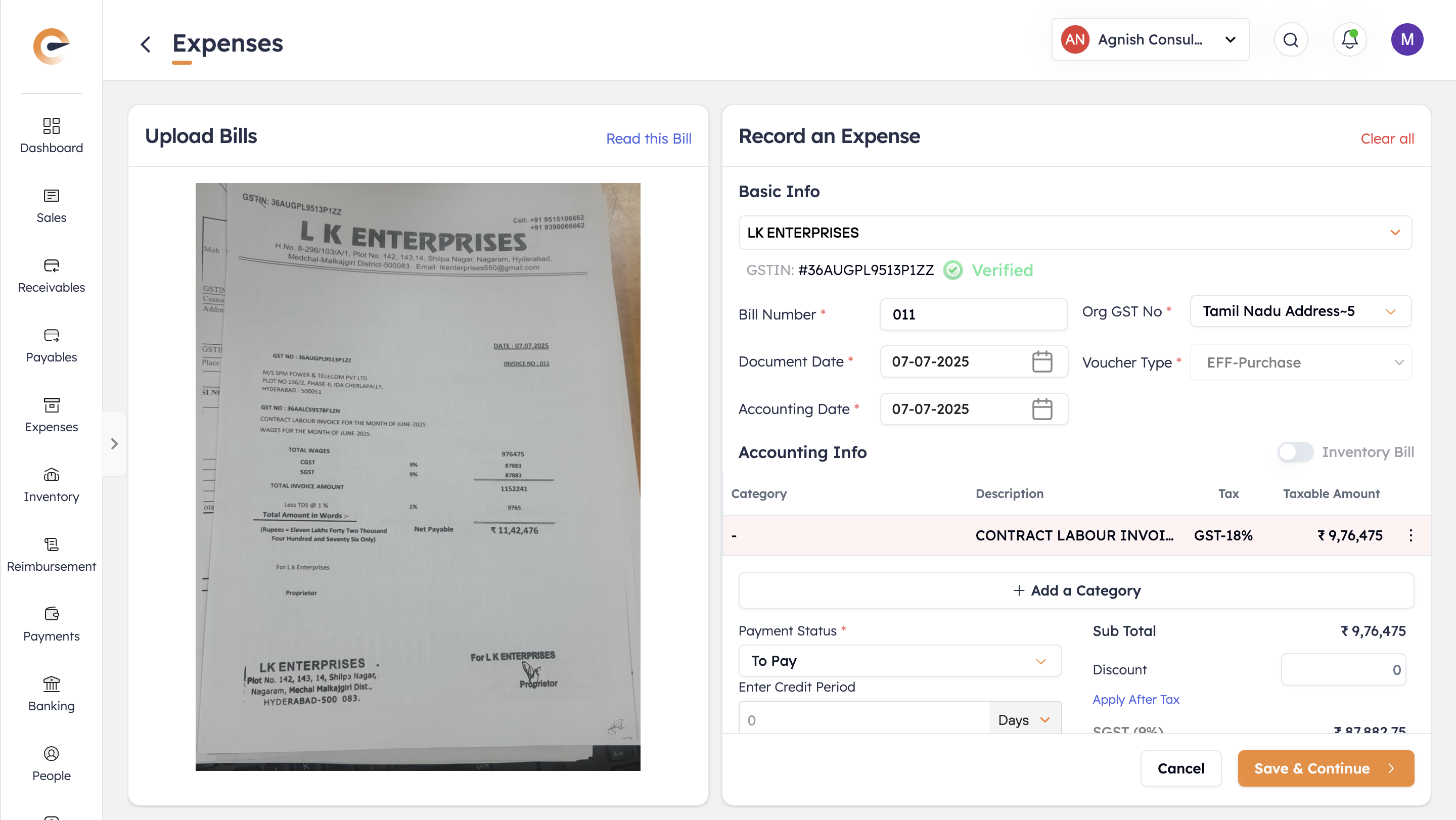
The Effortless Solution: The "Pre-Accounting" Firewall How to avoid GST penalties through automated billing software? You must validate data before it enters Tally.
Real-Time Validation: When a vendor bill is uploaded to Effortless, the App to validate GSTIN and automate e-invoicing features kick in. The OCR reads the GSTIN and pings the government portal.
The "Block" Logic: If the vendor has not filed their GSTR-1, the system warns the finance team: "Compliance Risk: Vendor Non-Compliant."
E-Invoicing: Effortless acts as a Tally-integrated GST billing software India, generating E-Invoices and E-Way Bills instantly. This ensures your revenue is reported to the government in real-time, removing the "Unbilled Revenue" risk.
4. Pillar 3: The Governance Layer (Maker-Checker)
The IPO Risk: SEBI and MCA now mandate a strict "Audit Trail" (Edit Log) for all financial transactions.
The Tally Prime Limitation: Tally Prime’s "Edit Log" feature is excellent for tracking who changed a voucher. But it doesn't tell you who authorized the spend.
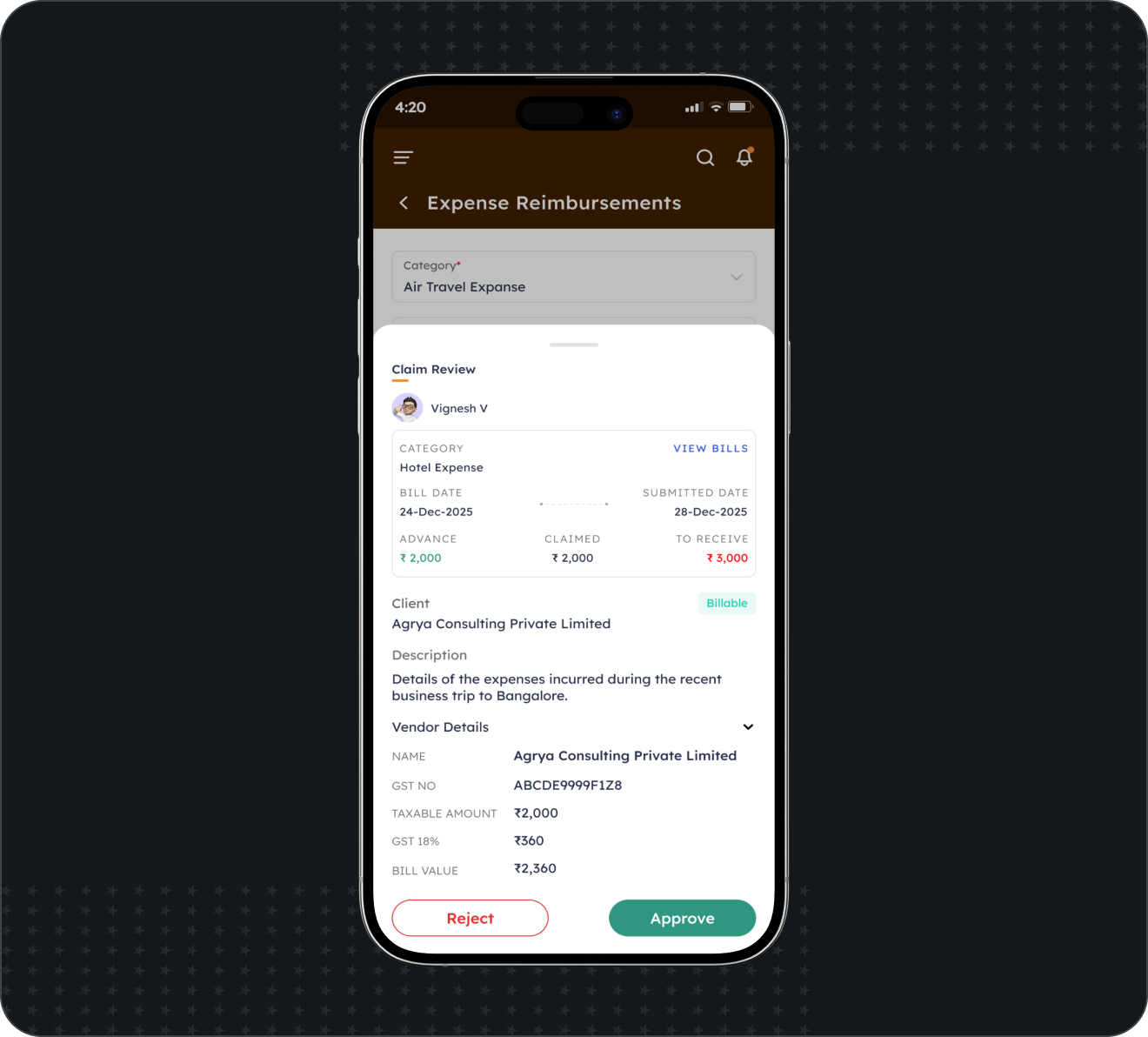
The Effortless Solution: The "Approval Matrix" Effortless provides the "Process Audit Trail" that sits above the "Data Audit Trail."
The Workflow:
Maker: Employee raises a PO for ₹5 Lakhs.
Checker 1: Department Head approves on mobile.
Checker 2: CFO approves on mobile.
Sync: Only then does the PO sync to Tally.
The Evidence: During Due Diligence, when the auditor asks, "Who authorized this?", you don't hunt for emails. You export the Approval Log from Effortless. It shows the Timestamp, Device ID, and User ID of the CFO’s approval.
5. Pillar 4: The Treasury Hub (Cash Flow Credibility)
The IPO Risk: "Cash Flow Mismanagement." Auditors look for discrepancies between the Bank Statement and the Cash Book. High suspense accounts are a red flag.
The Tally Prime Limitation: Bank reconciliation is often done manually at month-end. This creates a 30-day "Blind Spot" where cash data is unreliable.
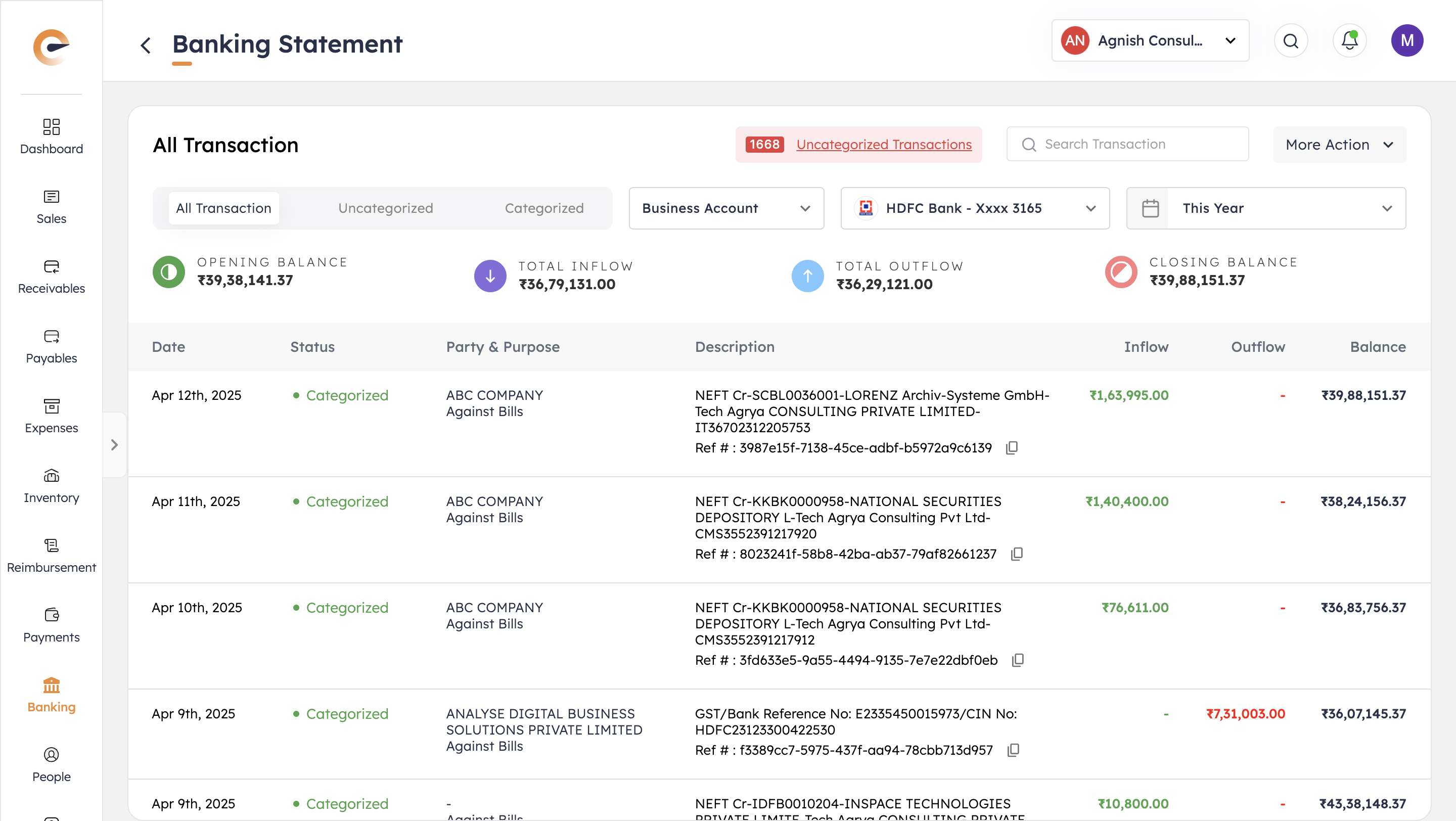
The Effortless Solution: Automated Reconciliation How to automate bank reconciliation with Tally?
The Feed: Effortless fetches the bank statement daily via secure API.
The Match: It auto-reconciles transactions against open Tally vouchers.
The Result: Your "Book Balance" matches your "Bank Balance" daily.
Why Auditors Love It: It proves that your Cash flow management software for MSMEs India is robust and that you aren't "cooking the books" at month-end to hide variances.
6. Strategic Verdict: Don't Migrate. Integrate.
The "Big 4" consultants might advise you to implement SAP S/4HANA to prepare for an IPO.
The SAP Path: ₹2 Cr+ cost. 12 months implementation. Disrupted operations. High risk of failure.
The Effortless Path: Layer Effortless on top of Tally. 7 days implementation. Zero disruption. 100% Governance.
The "IPO-Ready" Tech Stack:
Core Ledger: Tally Prime (The Record Keeper).
Governance Layer: Effortless (The Policy Enforcer).
Result: A "Two-Speed Architecture" where operations run fast (mobile apps), but finance runs safe (strict controls).
7. Action Plan: The Pre-IPO Data Cleanse Checklist
Before you file your DRHP, run this 4-step cleanse using Effortless:
The "Ghost Asset" Purge: Use the Effortless expense analyzer to identify and cancel unused SaaS subscriptions and dead vendor contracts.
The "Receivables" Reality Check: Use the How to send automatic payment reminders to customers on WhatsApp? feature to aggressively collect overdue debts. Write off what you cannot collect. Clean the books.
The "GST" Health Check: Run all active vendor GSTINs through the Effortless validator. Block non-compliant vendors immediately.
The "Bank" Zero-Out: Ensure all bank suspense entries are cleared using the auto-reconcile tool.
Conclusion: An IPO is a test of trust. Investors need to trust your numbers. By using Effortless to enforce discipline on top of Tally, you turn your financial data from a "Black Box" into a "Glass Box"—transparent, accurate, and ready for the public markets.
Key Takeaways & FAQ
Q1: Do we need to move to SAP/Oracle to go for an SME IPO?
A: No. SEBI regulations require "Audited Financials" and "Internal Financial Controls." They do not mandate a specific software. Tally Prime, when reinforced with a governance layer like Effortless (for audit trails, approvals, and Maker-Checker), is perfectly sufficient and far less risky than a last-minute ERP migration.
Q2: How does Effortless help with the mandatory "Audit Trail" (Edit Log) rule?
A: While Tally Prime captures the Edit Log of the accounting entry (as required by MCA), Effortless captures the Process Log—who requested the expense, who approved it, and when. This provides the "Internal Control over Financial Reporting" (ICFR) evidence that auditors require for IPO due diligence.
Q3: How to send automatic payment reminders to customers on WhatsApp?
A: Manual follow-ups are not audit-proof. Effortless automates this by linking Tally's "Outstandings" report to WhatsApp. It sends automated reminders with payment links, creating a documented trail of collection efforts that proves the quality of your receivables to auditors.
Q4: Can we validate GSTINs automatically?
A: Yes. Effortless acts as a Tally-integrated GST billing software India with a built-in "Compliance Guard." It verifies vendor GSTINs in real-time during bill booking, preventing the "ITC mismatch" issues that frequently delay IPO due diligence.
Q5: How to automate bank reconciliation with Tally for IPO readiness?
A: Manual reconciliation leaves room for "Suspense Accounts" which are a red flag for IPO auditors. Effortless connects to your corporate bank account and auto-reconciles transactions daily, ensuring your "Cash & Bank" schedules are clean and audit-ready at all times.
Suggested Reading from the Effortless Edge Blog:
The ₹100 Cr Ceiling: Why Companies Stop Growing on Basic Tally Prime
The CFO's Guide to Digital Transformation: Without Firing Your Old Accountant
The "Blind Spot" Audit: 5 operational metrics you cannot see in your Tally Profit & Loss
Case Study: How [Client] Reduced DSO by 12 Days Using Effortless
Growth Doesn't Wait. Why Should You?
Let Effortless help you scale—without the scramble.
Talk to Us
Have questions about how Effortless can transform your business? Our team of experts is ready to help.
- Schedule a personalized demo
- Get your specific questions answered
- Discuss your unique business challenges
We'll reach out within 4 business hours
Request Demo
See Effortless in action with a personalized demo tailored to your business.
- No generic presentations
- Focus on your specific challenges
- Get a clear picture of your potential ROI
Choose a time that works for you
Your Growth Engine Starts Here
More growth, less overhead. Discover how India's fastest growing businesses do it.
- Automate invoicing, collections & approvals
- Track sales team performance
- Get cashflow clarity in real-time
Clarity in 30 minutes. No pressure, just proof.