


Biz Analyst vs. Effortless: Why a "Siloed Viewer" is not an "Operating System"
A viewer shows numbers. An operating system runs work, fixes delays keeps cash steady
Executive Summary
In the Indian MSME ecosystem, the first wave of digitization was about Visibility. Small Tally on mobile Tools like Biz Analyst revolutionized the market by unchaining Tally data from the office desktop, allowing business owners to view ledgers and stock reports on mobile. This is the "Rearview Mirror" approach—essential for knowing where you have been.
However, scaling mid-market companies (₹50 Cr - ₹500 Cr) are now hitting a "Complexity Ceiling." Siloed visibility alone does not stop revenue leakage, prevent fraud, or enforce process discipline. To scale, businesses must move from a Siloed Viewer (Biz Analyst) to an Operating System (Effortless).
This blog post analyzes the structural differences between these two categories and why shifting to an Operating System is the only path to automated governance.
The Strategic Framework: The "Viewer" Trap
Most Founders and CFOs start their digital journey with a simple need: "I want to see my Tally numbers on my phone."
They purchase a single user of a "Tally on Mobile" tool. For ₹3,000/year, it solves the immediate anxiety of information blindness. But as the organization grows, the problems shift from Information to Control.
The Siloed Viewer (Biz Analyst): Syncs data from Tally to Mobile. It answers: "What happened yesterday on my Tally?"
The Operating System (Effortless): Syncs rules from Tally, enforces them on the field, and writes clean data back to Tally. It answers: "How do I control what happens right now?"
The difference is not features; it is Architecture. A Viewer is a window; an Operating System is a guardrail.
Deep Dive 1: Field Sales — The Difference Between "Booking" and "Controlling"
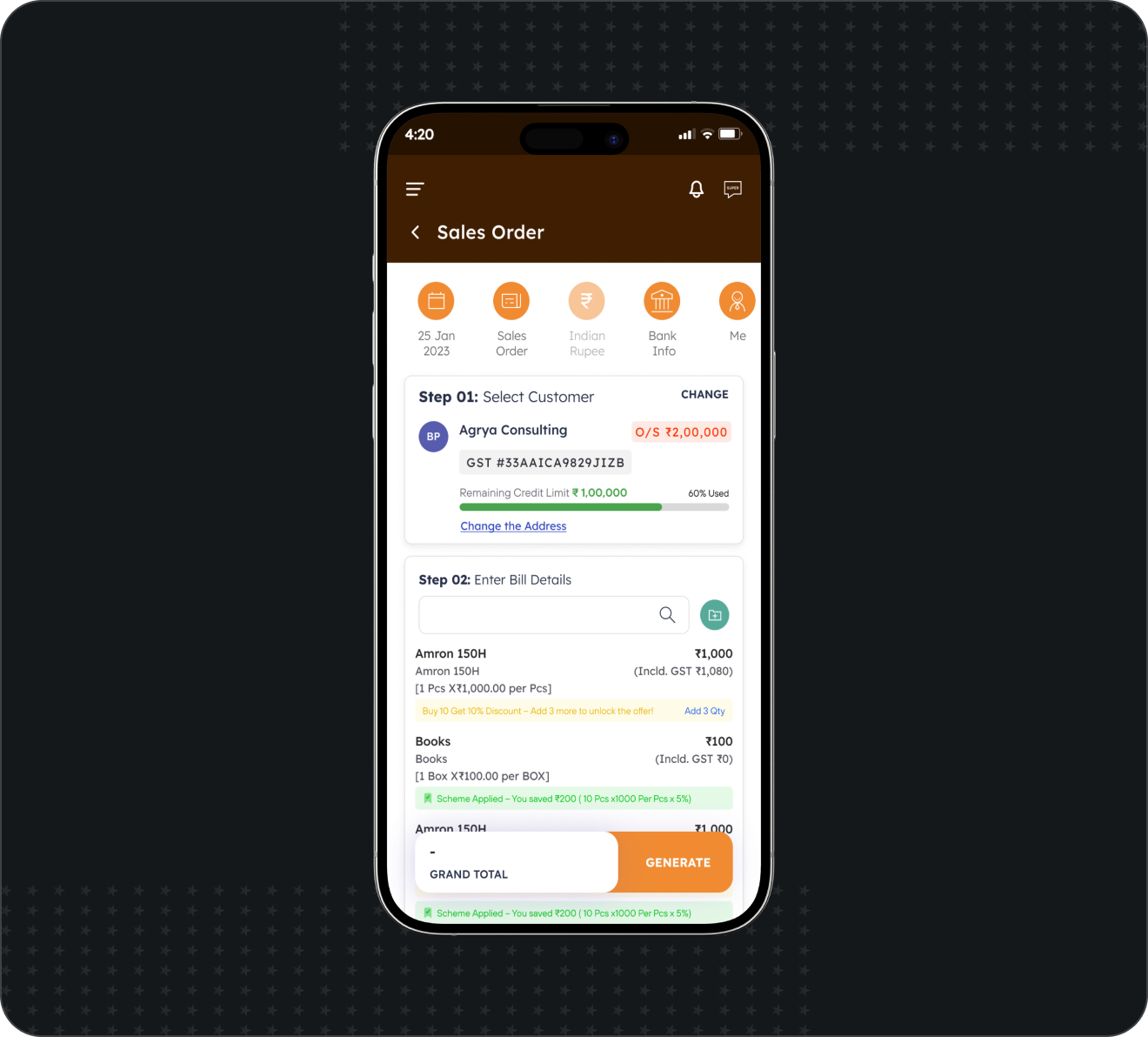
In the "Viewer" model, a sales representative uses the app to check stock and book an order. It is a digital replacement for a paper order pad. But does it solve the core business friction?
The Viewer Scenario (Biz Analyst)
Your salesperson visits a retailer. He checks the app, sees the customer has an outstanding balance of ₹5 Lakhs, but books a new order for ₹50,000 anyway because he needs to meet his sales target. The order syncs to Tally. The Accounts team spots the credit violation 2 days later, but the goods might already be dispatched.
Result: Revenue grows, but DSO (Days Sales Outstanding) worsens.
The Operating System Scenario (Effortless)
The salesperson arrives at the retailer.
GPS Validation: The app forces a "Geo-fenced Check-in." He cannot fake the visit from home.
Hard-Stop Credit Control: As he tries to book the ₹50,000 order, the Tally-integrated sales app blocks the transaction: "Credit Limit Exceeded. Collect ₹25,000 to proceed."
Instant Collection: He collects a cheque or uses a UPI QR or Payment link, records it in the app, and the system unlocks the order immediately.
Strategic Insight💡:
An Operating System doesn't just record the order; it enforces the financial health of the transaction.
Relevant Capabilities:
Field sales software: Effortless provides sales force automation (SFA) India capabilities that go beyond simple data entry.
Mobile order-taking app: We enable Low data-first mobile invoicing for remote areas, ensuring no downtime.
Question: How to send an invoice via WhatsApp after a sale? Effortless automates this instantly upon order approval, ensuring the customer gets a "Pay Now" link immediately.
Deep Dive 2: Expense Management — The "Leakage" Blindspot
For a ₹100 Cr company, a 2% leakage in indirect expenses (travel, petty cash, vendor bills) equals ₹2 Cr in lost profit. A Viewer tool cannot stop this because it treats expenses as "Data Entry," not "Compliance."
The Viewer Scenario
An employee travels for client meetings. He submits a manual claim via email for ₹5,000 for dinner (Policy limit: ₹1,500). He also attaches a handwritten "Kaccha" bill from a vendor who isn't GST compliant. The Viewer tool allows this entry to sync to Tally. The accountant is too overwhelmed to verify every line item.
Result: You pay for non-compliant expenses and lose Input Tax Credit (ITC).
The Operating System Scenario
The employee opens the Effortless app.
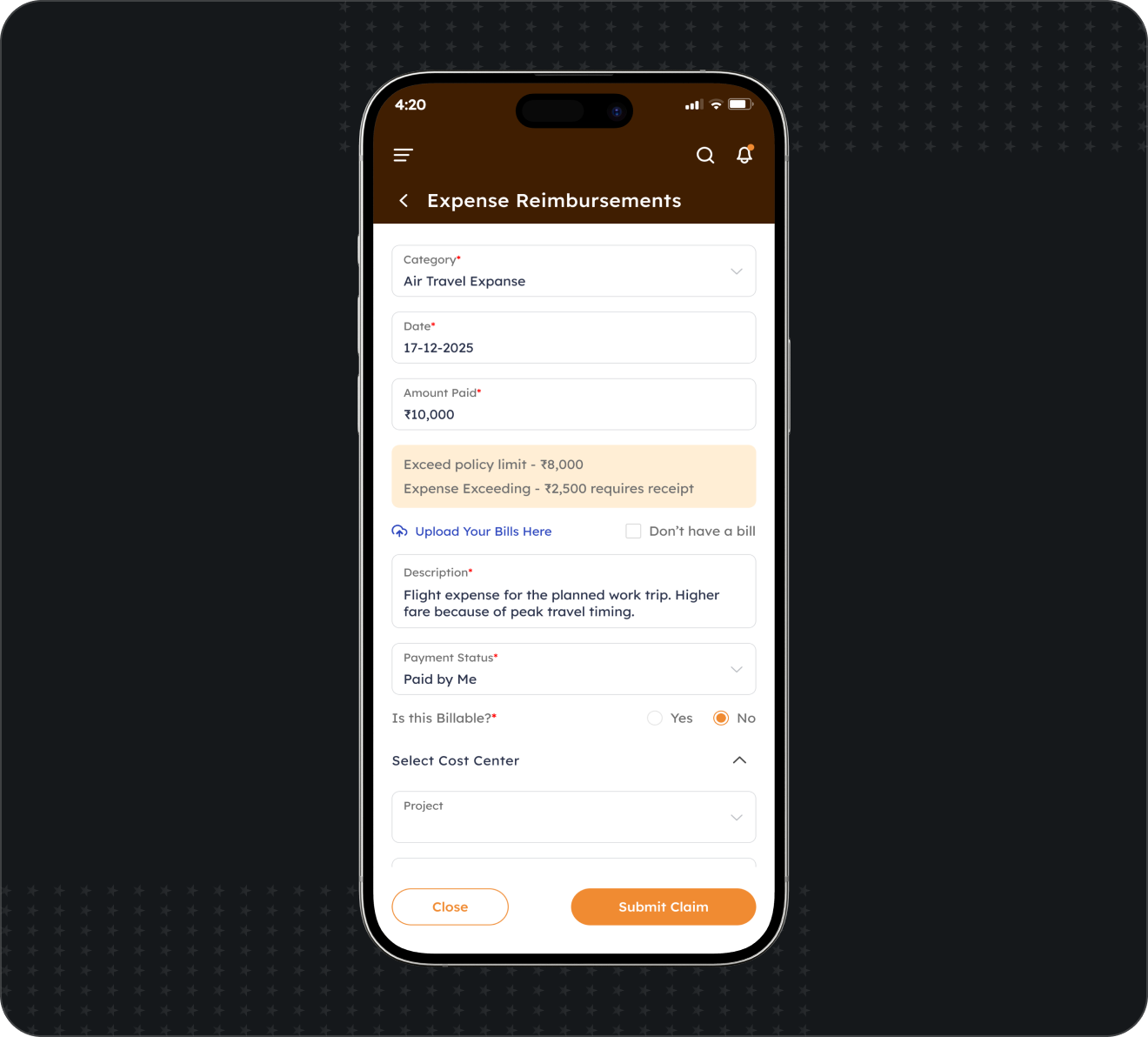
IDP (Intelligent Data Process) & Validation: He scans the bill using our mobile bill booking app. The IDP reads the text, does all required validations (GSTIN, Bank, TDS etc).
Policy Engine: The system flags the ₹5,000 dinner: "Policy Violation: Limit is ₹1,500. Request Rejected."
Compliance Shield: The app validates the vendor's GSTIN in real-time. If the vendor has defaulted on filings, it warns the finance team: "Block Payment: High Risk Vendor."
Strategic Insight 💡:
Automation is not about typing faster; it is about policing smarter. Effortless acts as a digital auditor for every single rupee.
Relevant Capabilities:
Expense management India: We offer an end-to-end reimbursement software India solution that handles multi-level approvals.
GST invoice scanner: Our app to validate GSTIN and automate e-invoicing ensures you never claim invalid ITC.
Question:How to automate employee expense claims and reimbursements? Use a policy-based system that auto-rejects violations before they reach the CFO.
Deep Dive 3: Banking & Reconciliation — The "Month-End" Nightmare
The most painful week for any Indian finance team is the first week of the month—Bank Reconciliation.
The Viewer Scenario
You can see your bank ledger balance on your phone. That’s it. Your accountant still downloads the Excel statement from HDFC/SBI, prints the Tally ledger, and spends 3 days manually matching entries with a highlighter pen.
The Operating System Scenario
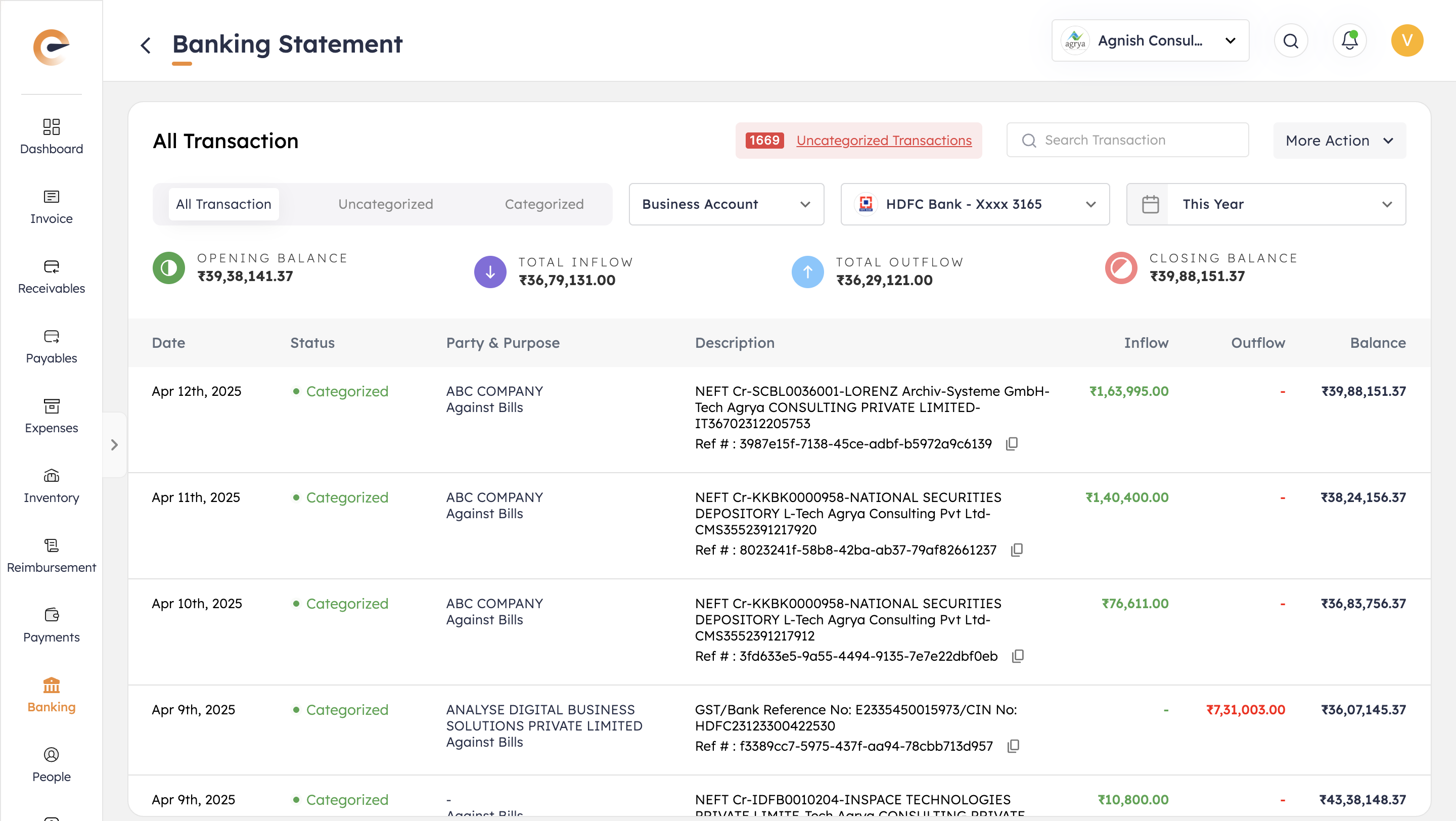
Effortless connects directly to your corporate banking.
Auto-Fetch: Bank statements are fetched automatically every morning from your email by Effortless AI IDP.
Auto-Match: The "Reconciliation Engine" matches the bank entry (e.g., "NEFT-29384") with the Tally voucher automatically.
Reverse Entry: If a bank charge or interest appears in the statement but not in Tally, Effortless prompts the accountant to create the voucher with one click.
Strategic Insight 💡:
Real-time reconciliation means the CFO gets a "Flash P&L" every morning at 9:00 AM, not on the 15th of the next month.
Relevant Capabilities:
Cash flow management software for MSMEs India: By automating the reconciliation, we give you true cash visibility.
Automate bank reconciliation with Tally: Eliminate the manual spreadsheet work entirely.
The ROI Model: Why "Cheaper" is Costlier
When comparing a Viewer (₹3,000/user) vs. an Operating System (Enterprise Pricing), the math must look at Total Cost of Ownership (TCO), which includes Leakage and Inefficiency.
Conclusion: Make the Shift
If your goal is simply to check your total sales invoices for the day while on vacation, a Viewer is sufficient. But if your goal is to scale from ₹50 Cr to ₹500 Cr, you cannot rely on "View-Only" technology. You need a system that enforces your will, protects your margins, and automates your governance.
You don't need a better view of the chaos. You need to eliminate it.
Transition to the Effortless Operating System today.
Key Takeaways
Viewers vs. OS: Biz Analyst is for passive monitoring; Effortless is for active governance and write-back control.
Credit Control: Effortless enforces credit limits in real-time on the field, preventing bad debt before it happens.
Expense Audits: Automated IDP and policy engines prevent "padded bills" and GST input loss.
Bank Reconciliation: Stop manual matching. Effortless automates the bank-to-Tally reconciliation process.
The Bottom Line: For mid-market companies, the cost of leakage in a "Viewer" model far exceeds the cost of upgrading to an Operating System.
FAQ: Common Questions from Indian Business Owners
Q1: How does Effortless handle offline sales in remote areas?
A: Our Low data-first mobile invoicing allows sales reps to create orders and invoices with low connectivity internet.
Q2: Can I send automatic payment reminders to customers on WhatsApp?
A: Yes. Effortless allows you to configure automated payment reminders with "Pay Now" links & UPI QR. You can schedule these based on the invoice due date (e.g., "Remind 2 days before due date"), reducing manual follow-ups.
Q3: Is my data safe with write-back access?
A: Absolutely. We use bank-grade encryption and a "Maker-Checker" workflow. No entry hits your Tally books without the correct approval authorization, ensuring your financial core remains pristine.
Q4: How does the GST validation work for vendor bills?
A: When you scan a bill using our mobile bill booking app, the system extracts the GSTIN and pings the government portal. It alerts you instantly if the vendor's filing status is "Active" or "Suspended," helping you avoid GST penalties through automated billing software.
Suggested Readings from our Blog:
The ₹100 Cr Ceiling: Why Companies Stop Growing on Basic Tally
The CFO's Guide to Digital Transformation: Without Firing Your Old Accountant
Stop the Leakage: 5 Ways Manual Expense Claims Are Costing You 4% of Revenue
Growth Doesn't Wait. Why Should You?
Let Effortless help you scale—without the scramble.
Talk to Us
Have questions about how Effortless can transform your business? Our team of experts is ready to help.
- Schedule a personalized demo
- Get your specific questions answered
- Discuss your unique business challenges
We'll reach out within 4 business hours
Request Demo
See Effortless in action with a personalized demo tailored to your business.
- No generic presentations
- Focus on your specific challenges
- Get a clear picture of your potential ROI
Choose a time that works for you
Your Growth Engine Starts Here
More growth, less overhead. Discover how India's fastest growing businesses do it.
- Automate invoicing, collections & approvals
- Track sales team performance
- Get cashflow clarity in real-time
Clarity in 30 minutes. No pressure, just proof.